
A relocation coordinator is defined as the project manager of your entire move, responsible for every logistical detail from the first inventory survey to final delivery. The role of relocation coordinator in long-distance moves is far more demanding than in local ones. Crossing state lines triggers FMCSA regulations under 49 CFR Part 375, and distances over 100 miles introduce pricing models, permit requirements, and vendor chains that most people have never encountered. A qualified coordinator handles all of it, so you don’t have to learn the hard way.
What does a relocation coordinator do during a long-distance move?
A relocation coordinator manages the full move lifecycle, from the in-home survey through delivery confirmation. The role covers scheduling, vendor oversight, permit acquisition, compliance verification, and real-time problem resolution. Think of the coordinator as the single point of contact who keeps every moving part aligned.
The core responsibilities break down into five areas:
- Inventory and survey management. The coordinator verifies the in-home survey, confirms item counts, and flags anything requiring special handling such as pianos, artwork, or server equipment.
- Permit acquisition. Urban moves often require parking and shuttle permits from city agencies. Securing these in advance prevents fines and delays on moving day.
- Vendor coordination. The coordinator liaises among packing crews, drivers, and storage providers, confirming schedules and resolving conflicts before they become problems.
- Regulatory compliance. For interstate moves, the coordinator verifies carrier authority, reviews the written estimate, and confirms the bill of lading is accurate before the truck leaves.
- Real-time communication. Coordinators work remotely on moving day but stay available by phone to manage delays, route changes, or unexpected access issues at either end.
Pro Tip: Ask your coordinator to send you a written schedule 48 hours before moving day. It should list every vendor, their arrival window, and a direct contact number. If they can’t produce that document, that’s a red flag.
The coordinator also handles post-move follow-up, confirming that all items arrived, that storage units were properly closed out, and that any damage claims are filed within the carrier’s required window.

How do federal regulations shape the coordinator’s responsibilities?
The regulatory framework governing long-distance moves directly determines what a coordinator must verify and document. Interstate moves crossing state lines fall under FMCSA jurisdiction, requiring written estimates, consumer rights disclosures, and a legally binding bill of lading. Coordinators are responsible for confirming that every document meets federal standards before the move begins.
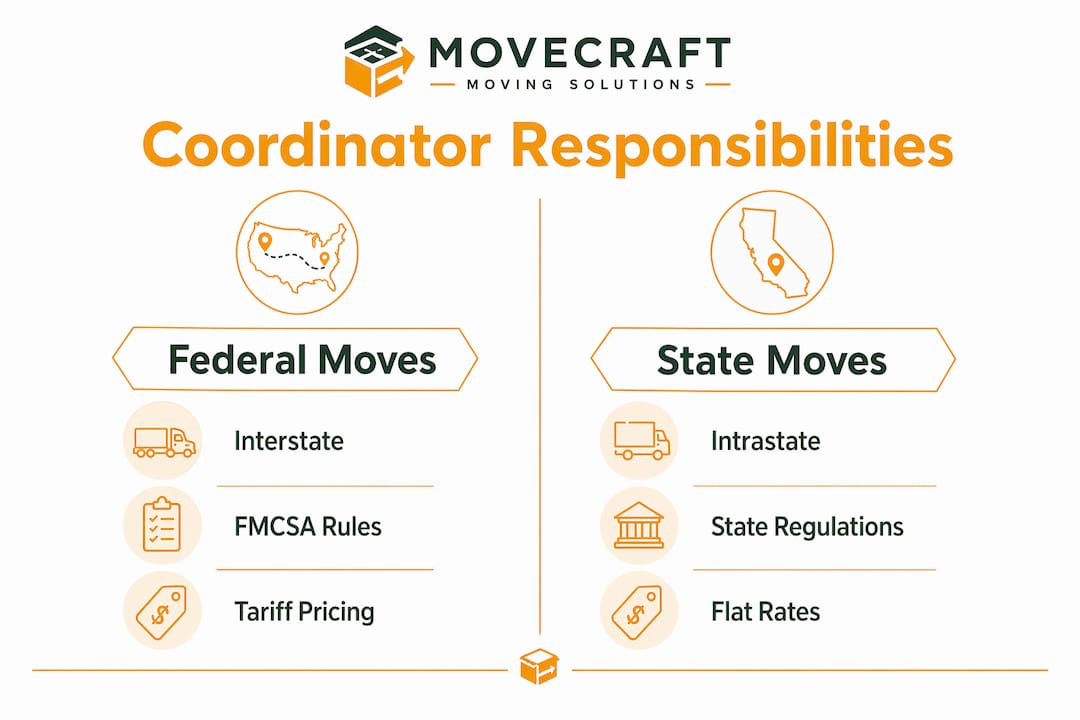
The distinction between interstate and operational long-distance definitions matters more than most clients realize. A move from one city to another within the same state but over 100 miles may fall under state agency oversight rather than FMCSA rules. That changes which protections apply to you and how disputes are resolved.
Pricing is where regulatory confusion costs clients real money. Federal tariff pricing and company flat rates operate under different frameworks, and clients who don’t understand the difference often receive unexpected charges at delivery. A coordinator clarifies which model applies to your move during the planning phase, not after the truck arrives.
| Move type | Regulatory body | Pricing basis | Key coordinator task |
|---|---|---|---|
| Interstate (crosses state lines) | FMCSA (49 CFR Part 375) | Weight and mileage | Verify written estimate and bill of lading |
| Intrastate over 100 miles | State agency | Company flat rate or tariff | Confirm applicable state protections |
| Local (under 100 miles) | State agency | Hourly rate | Limited regulatory oversight required |
Pro Tip: Before signing any estimate, ask your coordinator to identify whether your move is priced under a federal tariff or a company flat rate. The answer determines your legal protections if something goes wrong.
Understanding the difference between interstate and intrastate moves is not just academic. It directly affects your rights, your recourse options, and how your coordinator structures the entire compliance process.
What are the benefits of hiring a relocation coordinator for a long-distance move?
A long-distance move coordinator reduces stress by converting a chaotic process into a managed sequence of confirmed steps. Coordinators prevent costly mistakes by handling packing, storage, specialized shipping, and utility arrangements, all of which are easy to overlook when you’re managing a move on your own.
The benefits are concrete and measurable:
- Single point of accountability. Instead of calling five vendors separately, you call one coordinator. That person owns the outcome.
- Cost transparency. Full-service moving packages that include coordinator services typically range from $2,700 to $10,000 or more, based on weight and distance. Knowing that upfront prevents sticker shock.
- Avoidance of common pitfalls. Missed permits, unconfirmed elevator reservations, and unsigned storage agreements are the most common causes of moving day delays. Coordinators catch these during pre-move planning.
- Specialized service coordination. Items like wine collections, medical equipment, or IT infrastructure require carriers with specific certifications. A coordinator identifies and vets those carriers before booking.
- Business timeline protection. For companies relocating offices or data centers, a coordinator manages vendor schedules against operational deadlines, reducing downtime.
Businesses gain an additional layer of value through vendor management. A coordinator who handles commercial move vendor coordination tracks multiple service providers against a single project timeline, which is something an internal office manager rarely has the bandwidth to do well.
The cost of not hiring a coordinator often exceeds the cost of hiring one. A single missed permit can delay a move by a full day, which means additional truck rental fees, hotel costs, and lost work time.
How to choose the right relocation coordinator for your long-distance move
Choosing a relocation services coordinator requires more than checking online reviews. The right coordinator has verifiable experience with moves of your specific type, whether residential or commercial, interstate or intrastate.
- Verify long-distance experience specifically. Ask how many interstate moves the coordinator has managed in the past 12 months. General moving experience does not substitute for familiarity with FMCSA compliance requirements.
- Confirm regulatory knowledge. A qualified coordinator should be able to explain the difference between a binding and non-binding estimate without hesitation. If they can’t, keep looking.
- Check references from similar moves. Request contacts from clients who moved a comparable distance with a similar volume of goods. A coordinator who excels at apartment moves may not have the vendor network for a 10,000-square-foot office relocation.
- Clarify communication frequency. Ask how often you’ll receive updates during the planning phase and who your contact is on moving day. Ambiguity here is a warning sign.
- Understand the scope of services. Some coordinators manage only scheduling. Others handle permits, insurance verification, and post-move claims. Know exactly what you’re paying for before signing anything.
- Ask about contingency planning. What happens if the truck breaks down? What if the destination building denies access? A coordinator with real experience has answers ready, not improvised responses.
The selection process itself reveals a coordinator’s competence. A professional who asks detailed questions about your inventory, building access, and timeline before quoting a price is demonstrating the thoroughness you need for a long-distance move.
Key Takeaways
A relocation coordinator is the single most effective way to manage the complexity, cost, and compliance demands of a long-distance move.
| Point | Details |
|---|---|
| Coordinator as project manager | One person owns every vendor, permit, and schedule from survey to delivery. |
| Regulatory compliance is non-negotiable | Interstate moves require FMCSA-compliant estimates and bills of lading verified by the coordinator. |
| Cost clarity prevents surprises | Full-service packages with coordination run $2,700 to $10,000 or more, based on weight and distance. |
| Businesses need coordinator oversight | Commercial moves require vendor timeline management that internal staff rarely have capacity to handle. |
| Selection criteria matter | Verify interstate experience, regulatory knowledge, and contingency planning before hiring any coordinator. |
What I’ve learned from watching long-distance moves go wrong
The moves that fall apart almost never fail because of the truck or the weather. They fail because no one owned the process. I’ve seen clients arrive at their destination to find the elevator reservation was never confirmed, the parking permit expired the day before, and the storage unit was booked under the wrong name. Every one of those failures had the same root cause: no coordinator.
What surprises most people is how much of the coordinator’s value is invisible. You don’t notice the permit that was secured three weeks in advance. You don’t see the carrier authority check that flagged an unlicensed broker before any money changed hands. You only notice when those things don’t happen and the move collapses.
The other thing I’ve observed is that proactive communication separates good coordinators from great ones. A coordinator who calls you with updates is managing your move. A coordinator who waits for you to call is managing their inbox. That distinction becomes critical when something unexpected happens at 7:00 AM on moving day.
For businesses, the stakes are even higher. A commercial relocation without a dedicated coordinator is essentially a project with no project manager. Deadlines slip, vendors show up out of sequence, and the cost of downtime compounds fast. The coordinator’s fee is almost always recovered in avoided delays alone.
My honest advice: treat the coordinator selection as seriously as you treat the carrier selection. The carrier moves your belongings. The coordinator determines whether the entire operation succeeds.
— Info
How Movecraftmoving supports your long-distance relocation
Movecraftmoving pairs every long-distance client with a dedicated relocation strategist who manages the full move from first inquiry to final delivery confirmation.

Every Movecraftmoving coordinator handles permit acquisition, carrier vetting, regulatory compliance, and real-time communication on moving day. For businesses, the team manages complex vendor coordination across multiple service providers against your operational timeline. For individuals, the coordinator covers everything from packing service logistics to utility coordination at your new address. Movecraftmoving vets every carrier for FMCSA compliance, performance history, and insurance coverage before a single item is loaded. Contact Movecraftmoving through the consultation page to get a coordinator assigned to your move.
FAQ
What is a relocation coordinator?
A relocation coordinator is the project manager of a move, responsible for scheduling, vendor communication, permit acquisition, and regulatory compliance from start to finish.
How much does a long-distance move with coordinator services cost?
Full-service packages that include coordinator services typically range from $2,700 to $10,000 or more, priced primarily by weight and distance traveled.
Does a relocation coordinator work on moving day?
Yes. Coordinators typically work remotely on moving day but remain available by phone to manage delays, access issues, or route changes as they happen.
What regulations govern long-distance moves?
Interstate moves crossing state lines fall under FMCSA regulations, specifically 49 CFR Part 375, which requires written estimates and legally binding bills of lading. Moves over 100 miles within a single state are regulated by state agencies.
How do I verify a relocation coordinator is qualified?
Ask for references from clients with comparable move distances and volumes, confirm their knowledge of binding versus non-binding estimates, and verify that they can explain which regulatory framework applies to your specific move.
Recommended
- Long Distance Moving Process Overview: 2026 Guide – Move Craft Moving Solutions LLC
- Commercial Move Vendor Coordination Checklist for 2026 – Move Craft Moving Solutions LLC
- Why Residential Moves Need Utility Coordination – Move Craft Moving Solutions LLC
- Why East Coast Relocations Are Complex: 2026 Guide – Move Craft Moving Solutions LLC