
Getting your car ready for a long-distance relocation is not just about topping off the gas tank. Done right, it’s a systematic process that covers mechanical health, smart packing, emergency readiness, and disciplined driving habits. Here’s the short version of what that looks like in practice:
- Mechanical checks: Oil, coolant, brake fluid, transmission fluid, tire pressure and tread, battery load test, belts and hoses
- Packing essentials: Water, nonperishable snacks, first aid kit, phone charger, insurance card, registration, and comfort items
- Emergency kit: Jumper cables, flashlight, reflective triangles, spare tire (verified inflated), and roadside assistance contacts
- Driving strategy: Rest stops every two hours, no texting, speed adjusted for conditions, fuel buffer maintained
- Route planning: Map rest stops in advance, note gas station gaps, verify your documents before departure
Every one of these areas matters. Skip one and you’re gambling on a breakdown hundreds of miles from the nearest repair shop.
Table of Contents
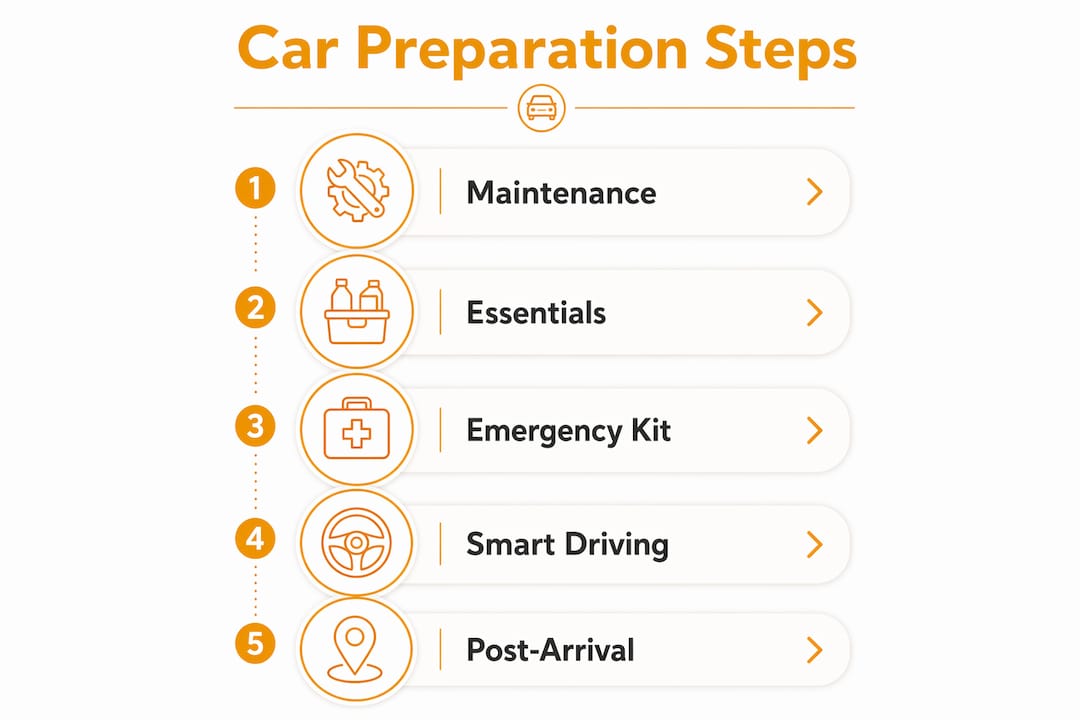
- 1. Complete your vehicle maintenance checklist before the move
- 2. Pack the right essentials inside your car
- 3. Build a real emergency kit, not a token one
- 4. Drive smart: fatigue, distractions, and speed management
- 5. Think of your car as a logistics asset, not just transportation
- 6. Preparing your car if you’re using a transport service
- 7. Inspect your car thoroughly after arrival
- Key Takeaways
1. Complete your vehicle maintenance checklist before the move
The single best thing you can do to prepare your car for a long-distance relocation is finish all deferred maintenance before you leave, not after you arrive. Check fluids and tire condition at least two weeks before departure. That buffer gives you time to book a mechanic, get parts ordered, and fix anything that surfaces without scrambling the night before.
Here’s what to work through:
- Oil: Change it if you’re close to your normal interval. Sustained highway driving at high speeds stresses the engine more than stop-and-go commuting.
- Coolant: Check the reservoir when the engine is cold. If the fluid looks rusty, cloudy, or has particles floating in it, flush and refill before you go.
- Brake fluid, transmission fluid, power steering fluid, and washer fluid: Top off every reservoir and look for signs of leakage underneath the car.
- Tires: Use the vehicle door jamb placard for the correct inflation pressure, not the number stamped on the tire sidewall. That sidewall number is a maximum limit, not a recommendation. Check the spare too.
- Tread depth: Run the penny test. Insert a penny into the tread groove with Lincoln’s head pointing down. If you can see the top of his head, the tire needs replacing.
- Battery: Battery failure is the most common cause of summer roadside breakdowns. Have a load test done at any auto parts store if the battery is over three years old. A standard voltage test won’t catch a battery that fails under cranking load.
- Belts and hoses: Look for cracks, blisters, or bulges. Summer heat accelerates rubber degradation, and a failed serpentine belt can kill the alternator, water pump, and AC compressor simultaneously.
- Brakes: Listen for grinding or squealing. Feel for pedal pulsation. Either symptom means a shop visit before departure.
- Lights: Test headlights (high and low beam), brake lights, turn signals, reverse lights, and emergency flashers.
- AC system: Run it at maximum cooling for 10–15 minutes. Weak output usually means low refrigerant. A failing AC creates dangerous heat conditions for children, elderly passengers, and pets.
Pro Tip: If your vehicle has over 100,000 miles, book a full pre-trip inspection with a trusted mechanic. At that mileage, belts, hoses, and suspension components may be approaching replacement intervals that a quick visual won’t catch.
2. Pack the right essentials inside your car
What you carry inside the vehicle matters almost as much as the mechanical prep. A well-packed car keeps you comfortable, safe, and functional if something goes sideways on the road.
Safety and documents first:
- Vehicle registration and proof of insurance (physical copies, not just digital)
- Driver’s license and any moving-related paperwork
- Phone charger and a portable battery pack as backup
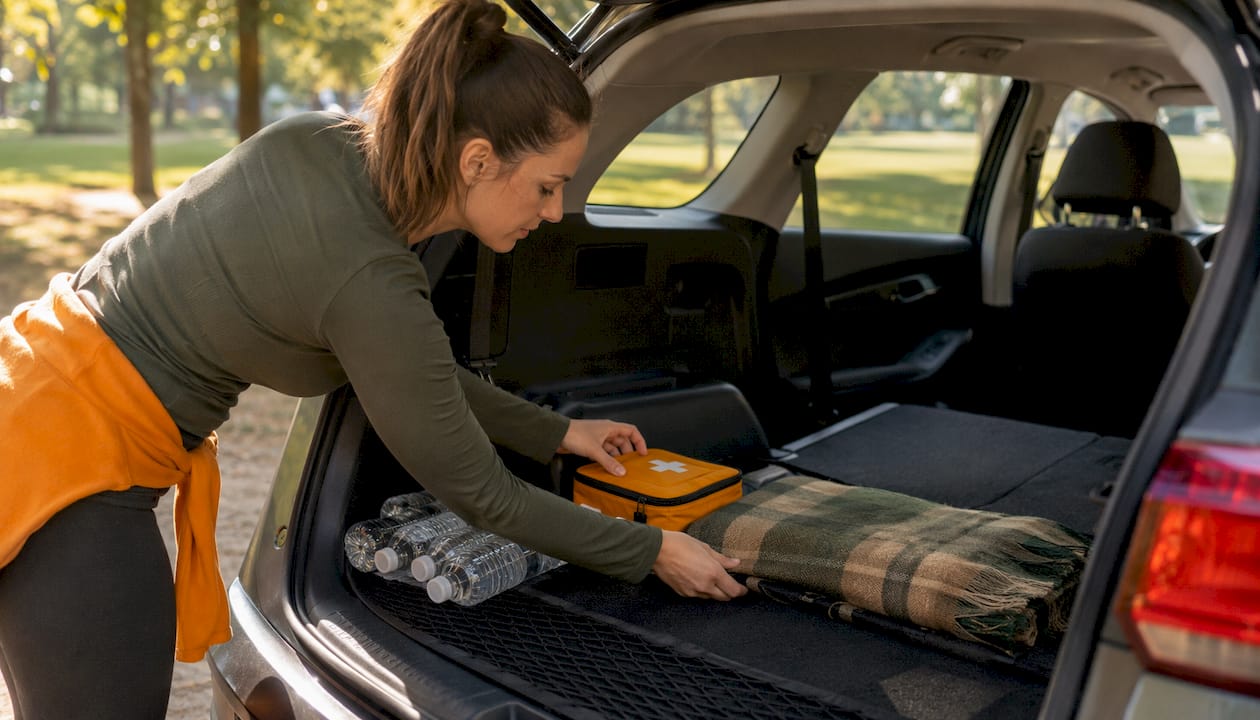
- First aid kit stocked with bandages, antiseptic wipes, pain relievers, and any prescription medications
Food and water:
- At least one gallon of water per person for the full trip
- Nonperishable snacks: nuts, granola bars, jerky, dried fruit. Avoid anything that melts or spoils in a hot car.
Comfort and entertainment:
- Layers of clothing, since temperatures vary dramatically across regions and inside the car
- Headphones and downloaded content for passengers
- Neck pillows and a light blanket for long stretches
Pet care (if applicable):
- Collapsible water bowl and a supply of your pet’s regular food
- Leash and waste bags accessible without digging through luggage
- Familiar toy or blanket to reduce travel anxiety
Pack everything so it’s secured and not sliding around the cabin. Loose items become projectiles in a hard stop and can distract you while driving. The long-distance moving inventory checklist from Movecraftmoving is a useful companion for tracking what goes in the car versus what goes in the moving truck.
3. Build a real emergency kit, not a token one
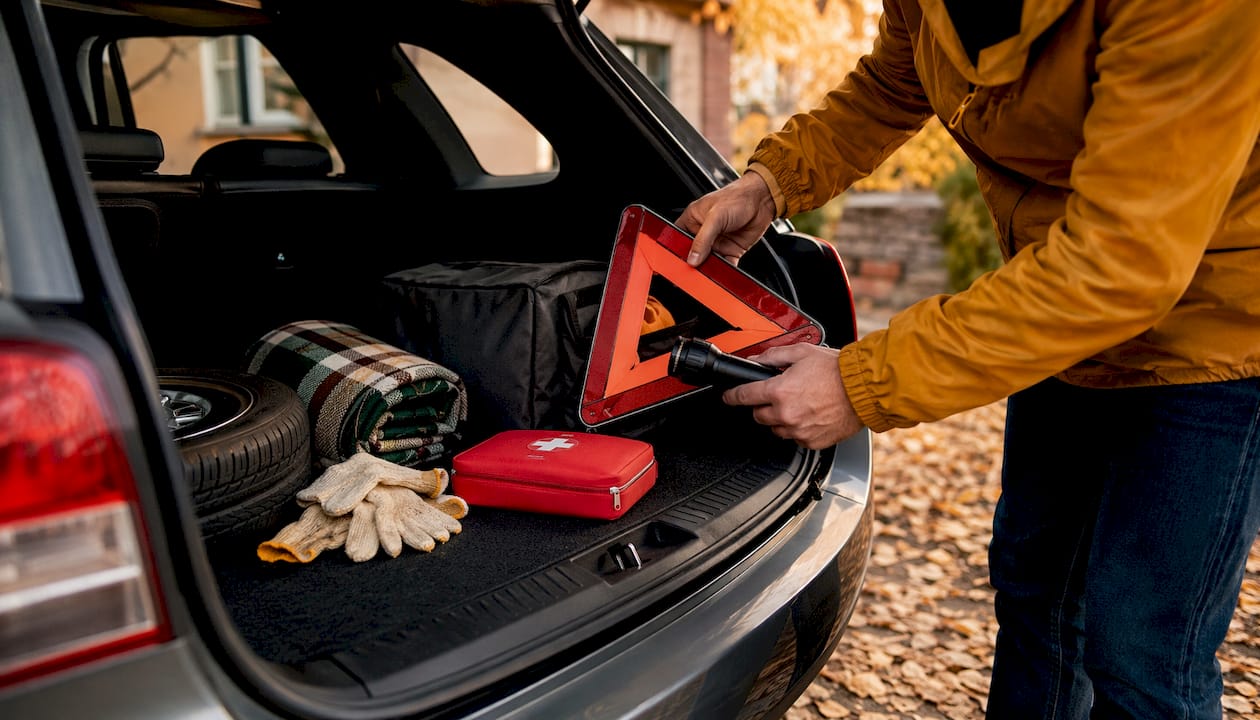
Most drivers have a sad little bag under the seat with a flat tire inflator and expired flares. For a cross-country relocation, that’s not enough. A proper roadside emergency kit for long-distance car prep includes:
- Spare tire (confirmed inflated), jack, and lug wrench (test the jack in your driveway before you leave)
- Jumper cables or a portable jump starter
- Flashlight with fresh batteries
- Reflective warning triangles or road flares
- Basic tools: screwdrivers, pliers, adjustable wrench
- Tire pressure gauge
- Duct tape (useful for temporary hose repairs)
- Emergency blanket
- Work gloves
- Water and nonperishable food (separate from your in-cabin supply)
- First aid kit
- Owner’s manual
Download roadside assistance apps and save local emergency contacts before you leave home. In areas with poor cell service, pre-downloaded maps and cached contact information can be the difference between a 30-minute wait and a three-hour ordeal. AAA, your insurance carrier’s roadside line, and your phone’s native emergency SOS feature are all worth setting up in advance. For guidance on what professional towing preparation looks like, long-distance tow preparation covers the specifics in useful detail.
Store emergency equipment in an accessible spot, not buried under three suitcases in the trunk.
4. Drive smart: fatigue, distractions, and speed management
Mechanical prep gets you to the road in good shape. How you drive determines whether you stay there. NHTSA recommends stopping every two hours to reduce driver fatigue, one of the leading contributors to highway accidents on long trips. That’s not a suggestion to push through if you’re feeling fine. Fatigue impairs reaction time before you notice it.
A few things that matter more than most drivers admit:
- No texting, ever. Law enforcement across the country is actively enforcing distracted driving laws. More importantly, no call or message is worth a crash.
- Speed for conditions, not just the posted limit. Rain, construction zones, dawn and dusk visibility, and night driving all warrant speeds below the legal maximum.
- AC management: Run the system at a moderate setting rather than maximum blast for extended periods. This reduces strain on the engine, particularly in stop-and-go traffic in summer heat.
- Fuel buffer: Keep at least a 50-mile fuel buffer when driving through regions with sparse gas stations. Running low in a remote area is a preventable emergency.
Pro Tip: Treat fuel stops as mandatory rest checkpoints. Get out, stretch, check tire pressure if you have a gauge handy, and glance at the dashboard for any warning lights that appeared during the last leg.
Long-distance driving is also when small handling changes become noticeable. If the car starts pulling to one side, the steering feels loose, or you hear a new noise, don’t rationalize it. Pull over when it’s safe and assess.
5. Think of your car as a logistics asset, not just transportation
Professional relocation advisors make a point that most drivers overlook: your vehicle is not just how you get there. During a long-distance move, it’s a critical logistics component carrying irreplaceable documents, medications, valuables, and people. That shift in mindset changes how you approach preparation.
Maintaining a 50-mile fuel buffer in remote stretches is one example. Another is monitoring component wear that worsens under sustained driving conditions. Heat accelerates belt and hose degradation. Extended highway speeds stress tires differently than city driving. A battery that starts fine on a cool morning may struggle after prolonged exposure to high temperatures during the day.
Pro Tip: Schedule your battery and tire evaluations at least two weeks before the move date. That window lets you get a maintenance appointment without paying rush rates or delaying your departure.
The long-distance moving insurance guide from Movecraftmoving covers what happens when vehicle breakdowns or delays affect the broader move timeline, worth reading before you finalize your departure plan.
6. Preparing your car if you’re using a transport service
If you’re shipping your vehicle rather than driving it, the preparation process is different but no less important. Transport carriers have specific requirements, and arriving unprepared can delay loading or create liability issues.
Before handing the car over:
- Remove personal items. Most auto transport carriers prohibit personal belongings inside the vehicle during shipping. Check your carrier’s policy in writing.
- Document the car’s condition. Photograph every panel, the interior, the windshield, and the undercarriage before loading. Date-stamp the photos. This is your evidence if damage occurs in transit.
- Leave the fuel tank at roughly a quarter full. A full tank adds unnecessary weight; an empty tank creates fuel system issues. A quarter tank is the standard expectation.
- Disable the alarm. A car alarm that triggers repeatedly during transport is a problem for the carrier and can result in a dead battery on arrival.
- Check tire pressure. Carriers load and unload vehicles on ramps. Properly inflated tires handle that process better and reduce the risk of sidewall damage.
- Note any existing mechanical issues. If the car doesn’t start reliably, leaks fluid, or has a known quirk, tell the carrier before loading. Surprises during unloading create disputes.
- Confirm insurance coverage. Your carrier should provide a bill of lading that documents the vehicle’s condition at pickup. Review it carefully and don’t sign off on anything that doesn’t match your photos.
The long-distance moving process overview from Movecraftmoving walks through the full logistics picture, including how vehicle transport fits into the broader move timeline.
7. Inspect your car thoroughly after arrival
The trip isn’t over when you pull into the new driveway. A post-trip inspection catches problems that developed during the drive before they become expensive repairs.
What to check immediately after arrival:
- Fluid levels: Oil and coolant in particular. Long highway drives can reveal slow leaks that weren’t obvious before departure.
- Tires: Look for uneven wear, sidewall damage, or any nails and debris picked up on the road. Check pressure again now that the tires have cooled.
- Brakes: If you noticed any new sounds or pedal feel changes during the drive, get them inspected before driving regularly in an unfamiliar city.
- Undercarriage: A quick visual for fluid spots on the ground where you parked overnight during the trip.
- Battery terminals: Check for corrosion, especially if the car sat in heat for extended periods.
- Dashboard warning lights: Any light that came on during the trip and was dismissed needs a diagnostic scan. Many auto parts stores offer free OBD-II scans.
Beyond the mechanical check, update your vehicle registration if you’ve moved to a new state. Most states require registration transfer within 30–90 days of establishing residency. Your insurance carrier also needs your new address and garaging location, since rates are tied to where the vehicle is primarily kept.
Key Takeaways
Preparing your car for a long-distance relocation requires mechanical maintenance completed two weeks out, a stocked emergency kit, disciplined driving habits, and a post-arrival inspection to catch anything the trip surfaced.
| Point | Details |
|---|---|
| Start maintenance two weeks early | Checking fluids and tires two weeks before departure leaves time to book repairs without rushing. |
| Use the door jamb placard for tire pressure | The sidewall number is a maximum limit, not the recommended inflation pressure for your vehicle. |
| Battery load test beats voltage test | A load test simulates cranking conditions and catches failing batteries that a standard voltage check misses. |
| Keep a 50-mile fuel buffer in remote areas | Sparse gas stations on cross-country routes make a fuel buffer a practical safety measure, not just a preference. |
| Post-trip inspection protects your investment | Checking fluids, tires, and brakes after arrival catches issues the drive created before they worsen. |
Recommended
- Long Distance Packing Service Benefits: Your 2026 Guide – Move Craft Moving Solutions LLC
- Long Distance Moving Inventory Checklist: 2026 Guide – Move Craft Moving Solutions LLC
- Long Distance Moving Process Overview: 2026 Guide – Move Craft Moving Solutions LLC
- The Role of Relocation Coordinator for Long-Distance Moves – Move Craft Moving Solutions LLC