
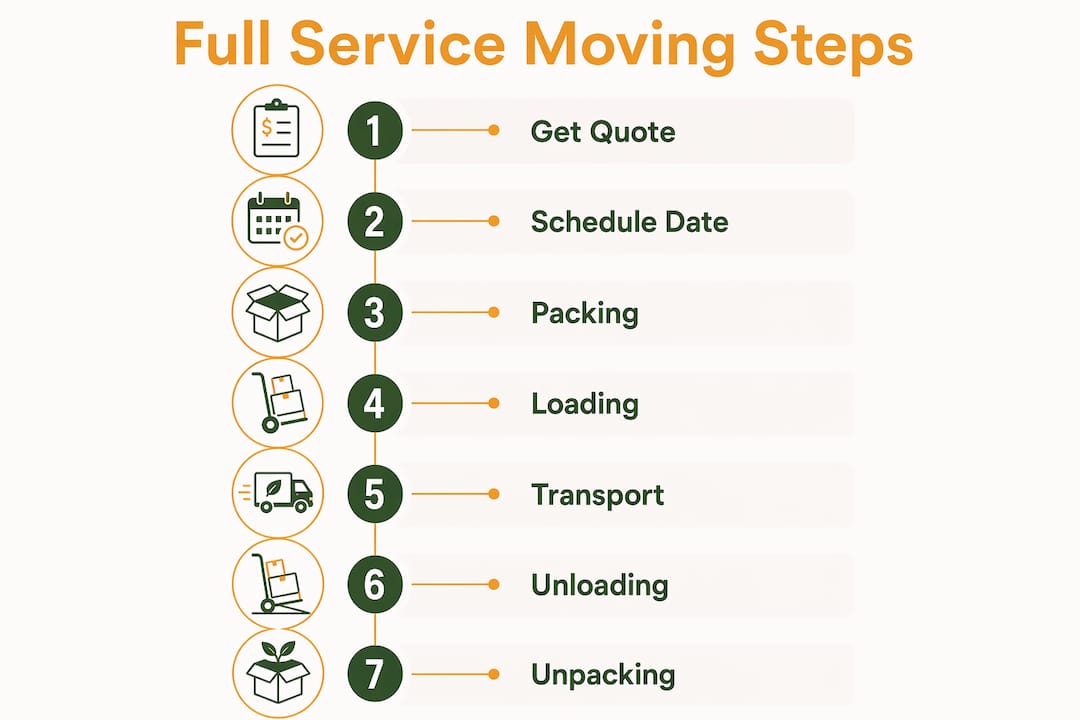
Full service residential moving is defined as a complete relocation solution where licensed professionals handle every physical task of your move, from packing your belongings at the origin to placing furniture in your new home. The industry term for this offering is “full service moving,” and it covers packing, loading, transportation, unloading, and unpacking under a single contract. If you have ever wondered what does full service moving include, the short answer is everything you would otherwise do yourself. Movecraftmoving connects families and individuals with vetted carriers who deliver exactly this level of hands-off service, built around transparency and punctuality.
What is full service residential moving and what does it include?
Full service movers handle every step of a residential relocation, from packing materials and boxing up your kitchen to driving the truck and reassembling your bed frame at the destination. That scope is what separates a full service move from labor-only or truck-rental options, where you carry most of the burden yourself.
The core services in a standard full service package include:
- Packing and unpacking. Crews bring professional-grade materials, including double-wall boxes, packing paper, and furniture blankets. Professional packers complete packing faster and more reliably than untrained individuals, which matters when you are working against a lease deadline.
- Furniture disassembly and reassembly. Bed frames, sectional sofas, and large shelving units get broken down before loading and rebuilt at the new address.
- Loading and unloading. Trained crews use dollies, straps, and proper lifting technique to protect both your belongings and the structure of your home.
- Transportation. A licensed driver operates a properly sized truck, managing routing, fuel, and timing.
- Specialty item handling. Pianos, antiques, large artwork, and fragile electronics require custom crating or padding. Full service movers carry the equipment and expertise for these items.
- Optional add-ons. Add-ons like storage, debris removal, and vehicle transport increase convenience but also affect the final price.
Pro Tip: Ask your mover specifically whether unpacking is included in the base quote or priced as an add-on. Many packages include packing but treat unpacking as optional, and that distinction changes your workload on arrival day.
Why hire full service movers: benefits and the right scenarios

Full service moving suits individuals with tight schedules, large households, specialty items, or long-distance relocations. The convenience factor is real, but the protection benefits are equally significant.
The strongest reasons to hire full service residential movers include:
- Time savings. A professional crew can pack a three-bedroom home in a single day. Doing the same yourself typically takes one to two weeks of evenings and weekends.
- Reduced damage risk. Trained packers know how to wrap fragile items, distribute weight in boxes, and secure furniture in the truck. Improper packing is the leading cause of breakage during self-managed moves.
- Federal valuation coverage. Federal law requires full service moving companies to offer valuation options and liability coverage for your property. Coverage levels vary, so reading the options carefully before signing matters.
- Physical and emotional relief. Moving ranks among the most stressful life events. Handing the physical work to professionals reduces the toll on your body and your mental bandwidth.
- Suitability for complex moves. Long-distance relocations, homes with more than three bedrooms, and moves involving pianos or antiques are the clearest cases where full service is the right call.
The scenario where full service moving is less justified is a short local move with minimal furniture and a flexible schedule. In that case, a labor-only crew or a rented truck may be more cost-effective. For a detailed look at how these options compare, the full service vs partial service breakdown from Movecraftmoving walks through the trade-offs clearly.
How much does full service residential moving cost?
Full service moving carries a premium price because it bundles labor, truck, fuel, packing materials, and professional expertise into one quote. That bundling is both the appeal and the reason costs run higher than partial-service alternatives.
The main factors that drive your final price are:
| Pricing Factor | How It Affects Cost |
|---|---|
| Distance | Long-distance moves cost significantly more due to fuel, driver hours, and logistics |
| Volume and weight | More items mean a larger truck and more crew hours |
| Specialty items | Pianos, safes, and antiques require custom handling and equipment |
| Packing scope | Full packing service adds labor and materials to the base rate |
| Valuation coverage | Higher liability coverage increases the quote but protects more of your property value |
| Add-on services | Storage, debris removal, and vehicle transport each carry separate fees |
Smaller or short-distance moves may not justify the cost premium compared to DIY options. The math shifts decisively toward full service when you factor in the value of your time, the risk of damage to expensive furniture, and the physical cost of doing it yourself.
Pro Tip: Get at least three written quotes and ask each company to itemize packing materials, labor hours, and valuation coverage separately. A single bundled number makes it impossible to compare offers accurately. Movecraftmoving’s approach to transparent pricing gives you a clear line-item breakdown before you commit.
How to prepare for a full service residential move
Good preparation makes the difference between a move that runs on schedule and one that stalls at 10:00 AM because the crew cannot access the hallway. Your job as the customer is not to pack boxes. It is to organize information and clear the path.
Follow these steps before your moving day:
- Build an inventory list. Walk through every room and document what you own, room by room. Creating an inventory list and communicating it to your mover helps them bring the right truck size, enough crew members, and the correct packing materials.
- Decide what you will handle personally. Identify items you want to pack yourself, such as jewelry, medications, important documents, and irreplaceable personal items. Keep these in a separate bag that travels with you, not in the moving truck.
- Confirm dates and access details. Verify your move date at least one week out. Confirm elevator reservations in apartment buildings, parking permits for the moving truck, and building access hours. Utility coordination is a separate but related task. The guide on residential move utility coordination covers this step in detail.
- Prepare specialty items. Notify your mover in advance about pianos, large artwork, gun safes, or fragile antiques. These items may require custom crating or a specialty crew, and last-minute disclosure delays the job.
- Clear pathways. Remove rugs, door stops, and any obstacles from hallways, stairwells, and doorways. A clear path protects your walls and speeds up the loading process.
- Label rooms clearly. Post a sign on each room door using the same label your mover will use on boxes. “Primary bedroom,” “home office,” and “kids’ room” are clearer than “bedroom 1” and “bedroom 2” when a crew of four is working fast.
Renters have additional steps to manage, including documenting the condition of both properties before and after the move. The residential move walkthrough guide covers what to photograph and when.
Key Takeaways
Full service residential moving is the most complete and protective option available, best suited for large households, long-distance relocations, and anyone who cannot afford the time or physical cost of a self-managed move.
| Point | Details |
|---|---|
| Full scope of service | Full service movers handle packing, loading, transport, unloading, and unpacking under one contract. |
| Federal liability protection | Federal law requires movers to offer valuation coverage, so always review your options before signing. |
| Cost is driven by scope | Distance, volume, specialty items, and packing add-ons are the primary cost drivers. |
| Preparation is your job | Inventory lists, cleared pathways, and advance notice about specialty items keep the move on schedule. |
| Best fit scenarios | Long-distance moves, large households, and tight timelines justify the premium cost most clearly. |
What I have learned after watching hundreds of moves go right and wrong
The most common misconception about full service moving is that paying for it means you have nothing to do. Customers who show up on moving day without an inventory list, without labeling their rooms, and without separating personal valuables from the general load create delays that cost them money and stress. Full service means the movers do the physical work. It does not mean you can be absent from the process.
The second thing I have noticed is that people underestimate the value of the liability coverage conversation. Most customers sign whatever valuation option is presented first without reading the difference between released value protection and full value protection. Released value protection is the minimum required by federal law and covers only a fraction of what your belongings are actually worth. Full value protection costs more but pays out replacement value. That conversation is worth having before moving day, not after something breaks.
My honest advice: treat the pre-move communication with your mover as seriously as the move itself. The crews who show up to a well-prepared home finish faster, handle items more carefully, and leave fewer problems behind. The customers who get the best results are the ones who spent two hours organizing before the truck arrived, not the ones who assumed the movers would figure it out.
— Info
Movecraftmoving’s full service moving options
Movecraftmoving works with the industry’s most thoroughly vetted carriers to deliver full service residential moves that run on schedule and respect every item you own.

Every partner in the Movecraftmoving network is screened for licensing, insurance, and performance history before handling a single customer move. Whether you are relocating across town or across the country, the process starts with a transparent, itemized quote so you know exactly what you are paying for. Visit Movecraftmoving to request your quote and connect with a relocation specialist who will match your move to the right crew, the right truck, and the right timeline.
FAQ
What is full service residential moving?
Full service residential moving is a complete relocation service where licensed movers handle packing, loading, transportation, unloading, and unpacking. It covers every physical task of the move under a single contract.
What does full service moving include?
Full service moving includes packing with professional materials, furniture disassembly and reassembly, loading and unloading, transportation by a licensed driver, and specialty item handling. Optional add-ons like storage and debris removal are available with most providers.
Why hire full service movers instead of doing it yourself?
Full service movers save significant time, reduce the risk of damage to your belongings, and provide federally required liability coverage. They are the strongest choice for long-distance moves, large households, and anyone with specialty items like pianos or antiques.
How does full service packing work?
Professional packers arrive with all materials, including boxes, packing paper, and furniture blankets, and box up your entire home systematically. They complete the process faster and more safely than most individuals can manage on their own.
Does full service moving cost more than other options?
Full service moving carries a higher price because it bundles labor, truck, fuel, materials, and expertise into one quote. The cost is most justified for complex, large, or long-distance moves where the time savings and damage protection outweigh the premium.
Recommended
- Residential Move Walkthrough: What Every Renter Must Know – Move Craft Moving Solutions LLC
- Full Service vs Partial Service Moving: 2026 Guide – Move Craft Moving Solutions LLC
- Why Residential Moves Need Utility Coordination – Move Craft Moving Solutions LLC
- Commercial Moving Timeline: What Businesses Need to Know – Move Craft Moving Solutions LLC