
Yes, movers can legally charge you for wait time, but only when specific, documented conditions slow the crew down. The most common triggers are elevator delays, parking or permit problems, unpacked boxes, and long carries from the truck to your door. Your written estimate, the mover’s tariff, and the bill of lading all have to spell out these charges before they’re valid, and federal rules under the FMCSA give you specific rights if a mover fails to notify you of delays.
TL;DR:
- Most wait-time charges are only valid if caused by documented delays like elevator issues, permits, or long carries, and they must be specified in estimates and tariffs.
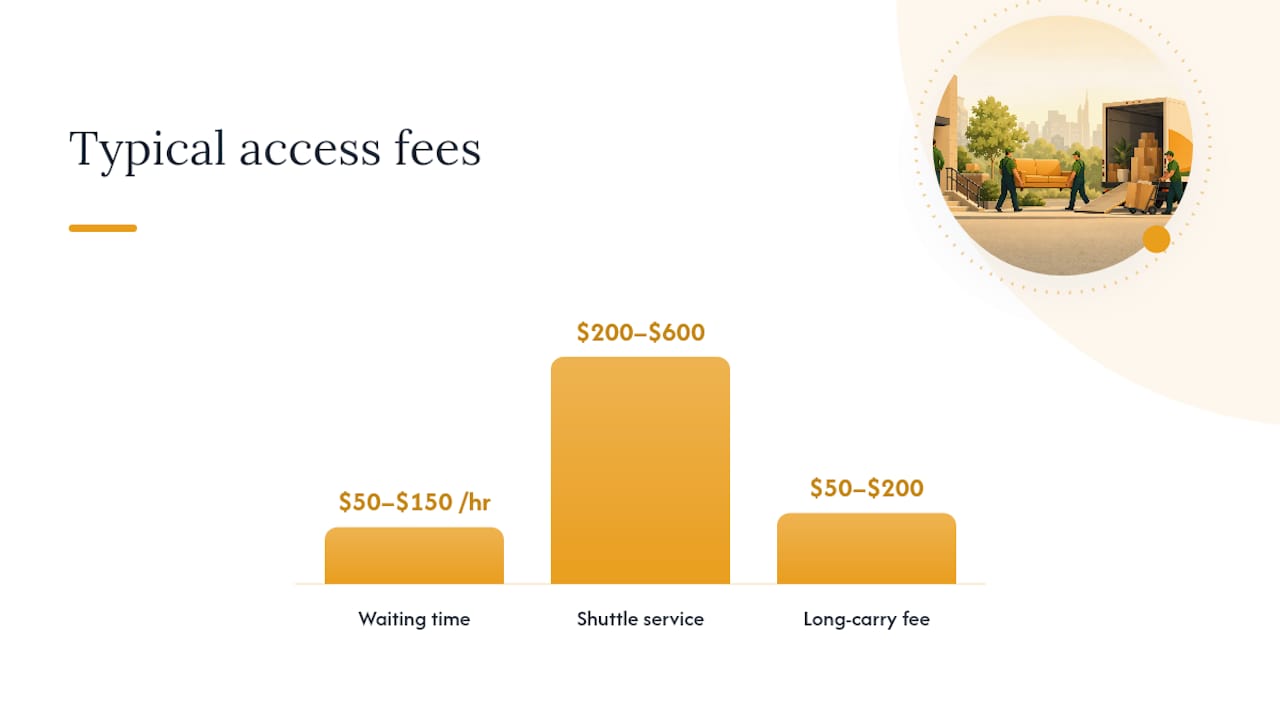
- Waiting fees typically range from 50 to 150 dollars per hour, with shuttle services costing up to 600 dollars, and long-carry fees between 50 and 200 dollars.
- To avoid surprises, request written estimates that specify wait-time and access fees, and confirm building access, parking permits, and elevator reservations early.
- Disputes should be supported with detailed documentation, including the estimate, tariff, bill of lading, and photos, and can be escalated to consumer protection agencies if unresolved.
- Hourly billing exposes you to delay costs directly, while flat rates can hide conditional fees, making clear communication and planning critical for budget control.
Table of Contents
- What Are Wait Time Charges and Hourly Overages?
- Common Triggers and Typical Fee Ranges
- How Movers Must Disclose Fees and Your Legal Protections
- How to Avoid or Minimize Wait-Time Charges
- If You’re Charged Unfairly: How to Document, Dispute, and Escalate
- Hourly vs. Flat-Rate Pricing: Which Exposes You to More Risk?
- Move Craft Perspective: How We Prevent and Handle Wait-Time Charges
- How Move Craft Helps You Avoid Wait-Time Charges
- Official Resources and Authoritative Explainers to Consult
- Sources
What Are Wait Time Charges and Hourly Overages?
Wait time is the fee a mover bills when the crew is on-site, on the clock, but not actually moving your belongings. It shows up as a line item separate from the base labor charge, and it’s one of the most common sources of sticker shock on move-day invoices. Understanding the mechanics behind it starts with knowing how movers actually structure their pricing.

Most local moves run on hourly billing: you pay for crew time plus the truck, and the “clock” starts when the crew arrives (or sometimes when they leave the dispatch yard) and stops when the job is done. Long-distance moves usually run on a flat or weight-based rate for the core transport, but wait-time and access fees still get added as conditional charges layered on top. That distinction matters because a flat-rate contract can still hide hourly-style penalties inside its fine print.
Here’s what typically appears in a mover’s billing structure:
- Hourly rate: Charged per crew member, per hour, often with a two-hour or four-hour minimum.
- Wait time: Billed in 15-minute or half-hour increments once the crew is idle past a grace period.
- Overtime: Kicks in after a set number of hours, often at a higher rate than the base hourly charge.
- Conditional fees: Triggered by specific circumstances (stairs, elevators, long carries) rather than time alone.
Look for language in your estimate like “waiting time billed after 15 minutes of crew idle time” or “clock starts upon arrival at pickup address.” If that language is missing entirely, ask for it in writing before you sign anything.
Common Triggers and Typical Fee Ranges
Wait-time charges rarely come out of nowhere. They almost always trace back to one of a handful of predictable situations, and knowing them in advance means you can either prevent them or budget for them honestly.
Elevator access is the single biggest culprit in city moves. If your building requires a reserved freight elevator and that reservation falls through, or if the elevator is shared with other tenants moving the same day, your crew sits idle while the meter runs. Parking is a close second: a moving truck that can’t get within reasonable distance of your door often requires a shuttle, which means a smaller vehicle ferries items back and forth, adding both time and a separate charge.
Other frequent triggers include:
- Incomplete packing when the crew arrives, forcing them to wait or pack on-site at a premium.
- Missing permits for street parking or loading zones in dense urban areas.
- Long carries, where the distance between the truck and your front door exceeds the standard allowance (often 75 feet).
- Weather delays, road closures, or building access restrictions that weren’t disclosed upfront.
Typical fee ranges you should expect: waiting time generally runs $50 to $150 per hour, shuttle service adds roughly $200 to $600 depending on distance and load size, and long-carry fees typically fall between $50 and $200. Elevator and stair surcharges are common too, and industry reporting confirms these access-related fees are among the most frequently disputed charges on final invoices.
These numbers aren’t fixed by law. They vary by region, company size, and season, but any legitimate mover should be able to quote you a specific rate before the truck ever shows up.
How Movers Must Disclose Fees and Your Legal Protections
Every legitimate wait-time or overage charge has to trace back to a document you’ve already seen. If it doesn’t, that’s your first red flag.
The paper trail starts with the tariff, which is the mover’s published rate schedule covering every possible fee, including conditional ones like waiting time and shuttle service. Your written estimate should reference that tariff directly, and it matters whether the estimate is binding (a fixed price regardless of final weight or hours) or non-binding (an estimate that can shift based on actual conditions). The bill of lading, signed at pickup, is the actual contract for that shipment and the document movers use to justify every charge on your final bill.
Federal rules add another layer of protection. FMCSA regulations require movers to provide reasonable dispatch service and to notify customers, at the mover’s own expense, if pickup or delivery will be delayed. If a mover fails to meet the agreed dates or misrepresents conditions, you may be able to recover reasonable expenses tied to that failure. These consumer protections are also codified in 49 CFR Part 375, which governs estimates, tariffs, and household goods transportation nationwide.
Before move day, request:
- A signed written estimate that specifies binding or non-binding status.
- The specific tariff line items covering wait time, shuttle, and long-carry fees.
- A blank bill of lading template so you know what you’ll be asked to sign.
- Written confirmation of your arrival window and any building access requirements you’ve already communicated.
Movecraftmoving’s licensed mover contract guide breaks down exactly what language to demand before you sign anything.
How to Avoid or Minimize Wait-Time Charges
Most wait-time fees are preventable, not inevitable. The overwhelming majority trace back to scheduling and access problems that a little planning solves outright.
- Book midweek if you can. Weekend, end-of-month, and holiday slots see the heaviest demand, and peak-season pricing analysis shows costs can run 10% to 30% higher during those windows, with a higher chance of overtime and delay charges tied to crew fatigue and scheduling overlaps.
- Reserve building access early. Call your building manager or HOA at least a week out to lock in the freight elevator, loading dock, or parking permit for your exact move window.
- Finish packing before the crew arrives. Movers billing hourly will pack loose items for you, but at your expense and on the clock.
- Designate one point of contact. Confusion about who’s authorizing decisions is a quiet but common source of delay.
- Confirm certificates of insurance (COIs) in advance if your building requires one from the moving company before granting access.
- Photograph and timestamp everything on move day, from the truck’s arrival to any idle periods and the condition of hallways or elevators.
Movecraftmoving’s move-day schedule planner gives you an hour-by-hour framework to plug these steps into, and a relocation checklist covers the broader prep timeline. If you’re coordinating a car shipment or other pre-move logistics, pre-booking transportation ahead of your move date follows the same logic: locking in access and timing early consistently reduces the odds of costly delays.
Pro Tip: Add a specific clause to your written estimate that defines “reasonable” wait time in minutes, not vague language. A mover unwilling to put a number on paper is telling you something about how they bill.
If You’re Charged Unfairly: How to Document, Dispute, and Escalate
A surprise wait-time charge on your final invoice isn’t something you have to accept on the spot. You have leverage, and using it correctly starts before the truck even leaves your driveway.
At delivery, request an itemized invoice that breaks out every conditional charge separately from the base labor cost. Refuse any demand for cash-only payment before you’ve reviewed that itemization; a legitimate mover has no reason to rush you past the paperwork. If a crew leader tells you a fee is “just how it works,” ask them to point to the exact tariff line or estimate clause that authorizes it.
If the charge still looks wrong after delivery, the dispute process runs in stages:
- Send a written dispute to the moving company referencing your signed estimate and the bill of lading, and request a corrected invoice.
- File a formal inconvenience or delay claim if the mover failed to meet agreed pickup or delivery windows, supported by timestamps and photos.
- Keep every document: the original estimate, the tariff excerpt, the bill of lading, and any change orders signed on move day.
If the mover doesn’t resolve the dispute directly, the FMCSA accepts consumer complaints against interstate movers and can investigate patterns of noncompliance, though it doesn’t typically resolve individual billing disputes for you. For that, small-claims court or your state’s consumer protection office are usually the faster path. Movecraftmoving’s guide on disputing a damaged goods claim walks through a similar documentation process that applies directly to fee disputes too.
Hourly vs. Flat-Rate Pricing: Which Exposes You to More Risk?
The pricing model you choose changes how wait-time charges actually hit your wallet, and most people don’t realize this until they’re comparing two quotes that look nothing alike.
Hourly billing is transparent but unforgiving. Every minute of delay shows up directly on your invoice, so a two-hour elevator wait becomes a real, calculable cost you can see coming. Flat-rate and binding estimates feel safer upfront, but conditional fees like shuttle service or long-carry charges often sit outside that flat number, tucked into tariff language you may not have read closely.
Local moves under a few hours tend to favor hourly pricing since the total exposure stays small and predictable. Long-distance moves usually favor a binding or weight-based flat rate, since it protects you from mileage and weight surprises, but that’s exactly why you need to ask what’s excluded.
Before signing either type of quote, ask:
- Does the flat rate include or exclude wait time, shuttle fees, and long-carry charges?
- What’s the grace period before wait-time billing starts?
- Is overtime billed at a different rate than standard hours?
Picture the same two-hour elevator delay under both models: on an hourly quote, it adds a clearly itemized $100 to $300 to your bill. On a flat-rate quote, that same delay might trigger a separate “access fee” buried in the tariff, one you never budgeted for because the base price looked fixed.
Move Craft Perspective: How We Prevent and Handle Wait-Time Charges
Wait-time fees usually aren’t scams. They’re what happens when nobody confirmed building access, packing status, or parking in advance. That’s a coordination failure, not a pricing trick, and it’s exactly the gap Movecraftmoving exists to close.
We vet every carrier in our network for tariff transparency and require clear estimate language before a move is confirmed. Our coordinators confirm elevator reservations, parking permits, and COI requirements ahead of move day, not after the truck is idling outside. For readers who want a head start, our relocation checklist and contract best practices guide cover the exact language and prep steps that prevent these charges from ever appearing on an invoice.
— Info
How Move Craft Helps You Avoid Wait-Time Charges
Movecraftmoving is the alternative to booking a mover cold off a marketplace listing: instead of guessing whether your quote hides conditional fees, you get a vetted coordinator who confirms building access, parking, and tariff terms before your move date locks in. That single point of accountability is what keeps wait-time surprises off your final invoice.

We connect you with carriers we’ve already checked for clear, disclosed pricing, and we walk through your written estimate line by line so nothing about elevator windows, shuttle needs, or long-carry distances gets left to chance. If you’re planning a long-distance move and want to see exactly how that coordination works from booking to delivery, start with our long-distance moving process overview and request a quote built around your specific timeline.
Official Resources and Authoritative Explainers to Consult
For the full legal framework and industry context behind these fees, consult FMCSA’s Subpart F guidance on delay notification and claims, 49 CFR Part 375 for the codified household goods rules, Moving for consumer checklists, and FreightWaves for industry-level fee reporting.
Sources
- Transportation of My Shipment (Subpart F) | FMCSA
- Hidden Fees Moving Companies Charge | FreightWaves
- 49 CFR Part 375 — Transportation of Household Goods