
Short answer: you can only safely DIY certain pool table moves. If your table has heavy slate, tight access, or stairs, plan to hire pros. The math comes down to three checks: what the bed is made of, how many turns and stairs stand between the table and the truck, and whether you have four strong helpers and the right straps and dollies on hand.
TL;DR:
- Moving slate pool tables requires a crew of four or more helpers, proper equipment, and careful route planning to avoid damage or accidents.
- Heavy, three-piece slates significantly increase moving costs, especially when stairs, tight doorways, or long distances are involved, sometimes exceeding $1,500.
- Proper disassembly follows a strict sequence: removing pockets, rails, felt, slate, and legs, with careful packing to prevent scratches or cracks during transit.
- DIY moves are safest on lightweight laminate tables without stairs or tight access, but heavy slate tables on multiple flights or tight spaces should always be handled by professionals.
- Securing detailed, itemized quotes before hire ensures proper coverage, crew size, and surcharge estimates, minimizing risks of damage and unexpected expenses.
Table of Contents
- Pool Table Moving Decision Checklist: DIY or Hire?
- How Much Does Pool Table Moving Cost?
- Step-by-Step Pool Table Disassembly and Packing
- Crew, Equipment, and How to Load the Truck
- Reassembly, Leveling, and Refelting
- When Should You Hire Pool Table Movers Instead?
- What Movers Get Wrong About Slate, and What We Watch For
- How Move Craft Handles Pool Table and Specialty Moves
- Sources
Pool Table Moving Decision Checklist: DIY or Hire?
Run through this before you rent a dolly or call anyone. Most bad outcomes trace back to skipping one of these checks, not bad luck.
- Bed material. Slate beds, even in three pieces, commonly weigh several hundred pounds combined. Laminate or “slatron” tables run much lighter and forgive more mistakes.
- Route and access. Measure every doorway, hallway turn, and staircase width, and check how close a truck can actually park. A 34-inch doorway with a 90-degree turn can stop a slate move cold.
- Crew and equipment. Slate tables need a genuine three to four capable helpers, not two friends and good intentions. Community reports from billiards forums back this up consistently, with lost hardware and cracked felt showing up as the most common DIY moving mistakes.
- Stairs. Any staircase involved with a slate table is where DIY risk spikes fastest. This is the single factor most likely to flip your decision toward hiring pros.
- Insurance and replacement cost. Check what a refelt or a slate replacement actually costs before you decide the risk is worth saving a few hundred dollars.
Pro Tip: Take five minutes and dry-run the route with a tape measure before you touch a wrench. If your slate crate or wrapped rail won’t clear a hallway corner on paper, it won’t clear it in real life either.
How Much Does Pool Table Moving Cost?
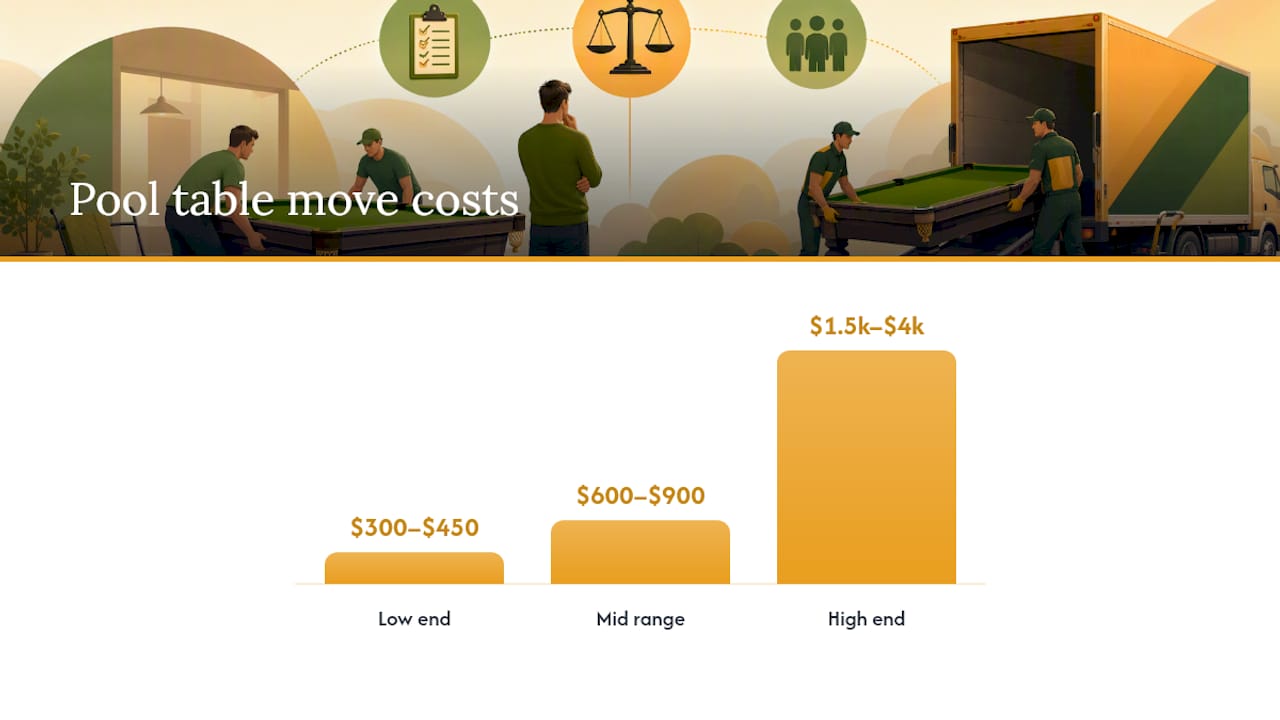
Expect to pay a wide range for a professional pool table move, with typical jobs landing near a moderate average price, according to Angi’s cost data. That spread looks huge until you understand what drives it: this isn’t one job, it’s five different jobs wearing the same name.
What pushes the price up or down:
- Table weight and slate configuration (one-piece vs. three-piece slate changes the crew size needed)
- Distance between origin and destination
- Number of stairs, landings, or narrow turns
- Whether disassembly and reassembly are included
- Insurance or valuation coverage added to the job
- Crane or rigging needs for extreme access problems (upper-floor condos, no elevator)
Disassembly and reassembly typically add an additional fee on top of the base move, and that cost is worth budgeting separately rather than assuming it’s included automatically, according to Angi’s guide.
Weight and stairs don’t add cost in a straight line. A pricing pattern from heavy-item movers who handle gun safes shows that a single flight of stairs can tack on far more than a flat hourly stair fee once the item crosses a certain weight class, because crew size and rigging requirements jump all at once rather than scaling gradually. Pool table slate behaves the same way.
Three quick scenarios:
- Low end (~$300 to $450): Local move, laminate bed, ground floor to ground floor, no disassembly needed.
- Mid range (~$600 to $900): Standard three-piece slate table, one flight of stairs, full disassembly and reassembly included.
- High end ($1,500 to $4,000): Long-distance move, heavy one-piece slate, tight urban access, possible crane or specialty rigging.
Step-by-Step Pool Table Disassembly and Packing
The pool table moving process always follows the same order, whether you’re doing it yourself or a crew is doing it for you. Skipping steps or doing them out of sequence is how felt gets torn and slate gets chipped.
Before you touch a bolt:
- Take photos of every joint, corner, and hardware location from multiple angles.
- Set up a labeled hardware bag system, one bag per rail or section, with masking tape and a marker.
- Gather tools: socket wrench set, staple remover, box cutter, moving blankets, packing tape, and a slate crate or heavy cardboard if you don’t own a purpose-built crate.
Disassembly order:
- Pockets first. Remove the pocket liners and set hardware aside in labeled bags.
- Rails next. Unbolt the rails from underneath, keeping bolts matched to their original rail using tape labels.
- Felt after rails. Pull staples carefully with a staple remover, rolling the felt (never folding it) to avoid creasing.
- Slate last of the flat components. Slate pieces separate at seams, and this is the step where a second and third set of hands matter most. Never let one person carry a slate piece alone.
- Legs come off the frame once the bed is clear, usually the simplest step of the entire teardown.
Lowe’s step-by-step guide follows this same pockets, rails, felt, slate, legs sequence, and deviating from it is one of the more common ways DIY movers damage a table.
Packing standards for each piece:
- Wrap rails individually in moving blankets, securing with tape, not directly on the finish.
- Roll felt loosely and store it flat, never crumpled in a box.
- Crate slate pieces separately, standing on edge if the crate allows, never stacked flat under other weight.
- Wrap legs in blankets or bubble wrap, paying extra attention to any carved or finished edges.
Pro Tip: Staples left in old felt are the number one cause of surprise finish scratches during reassembly. Run your hand along every rail edge after pulling felt, and pull any stray staples before you wrap anything.
Crew, Equipment, and How to Load the Truck
Weight class determines almost everything about how many people and how much gear a pool table move actually needs. As a rough guide, a laminate table needs two to three helpers. A standard three-piece slate table needs three to four. A one-piece slate table, or any slate move involving stairs, needs four or more, with extra hands acting purely as spotters on turns and landings.
Equipment worth renting or buying before move day:
- Appliance dolly, rated for at least 800 pounds
- Furniture straps or lifting straps designed for two-person carries
- Ratchet straps for securing pieces in the truck
- Moving blankets, more than you think you need
- A forearm forklift strap set if you’re moving slate up or down stairs
U-Haul’s guidance on moving heavy single items like safes applies directly here: appliance dollies and mover’s wrap are the baseline gear, and the same source flags stairs as the point where professional help becomes the safer call for anything in this weight range.
Stairs change the calculation fast. A short, straight staircase with a wide landing is manageable with enough hands and a forearm forklift setup. A tight, turning staircase with a heavy slate load is exactly the scenario where renting a crane or hoisting the slate through a window starts making more sense than risking a fall.
Loading the truck: slate goes in first, flat against the truck wall, blocked on both sides so it can’t shift. Rails and legs load next, strapped to the truck’s built-in tie points, never resting loosely against the slate crate. Felt travels last, on top, away from anything that could crush or tear it.
Reassembly, Leveling, and Refelting
Reassembly reverses the disassembly order: legs go on first, then slate, then felt, then rails, then pockets. Slate seams need shimming until the surface reads flat across every seam, checked with a level in multiple directions, not just corner to corner.
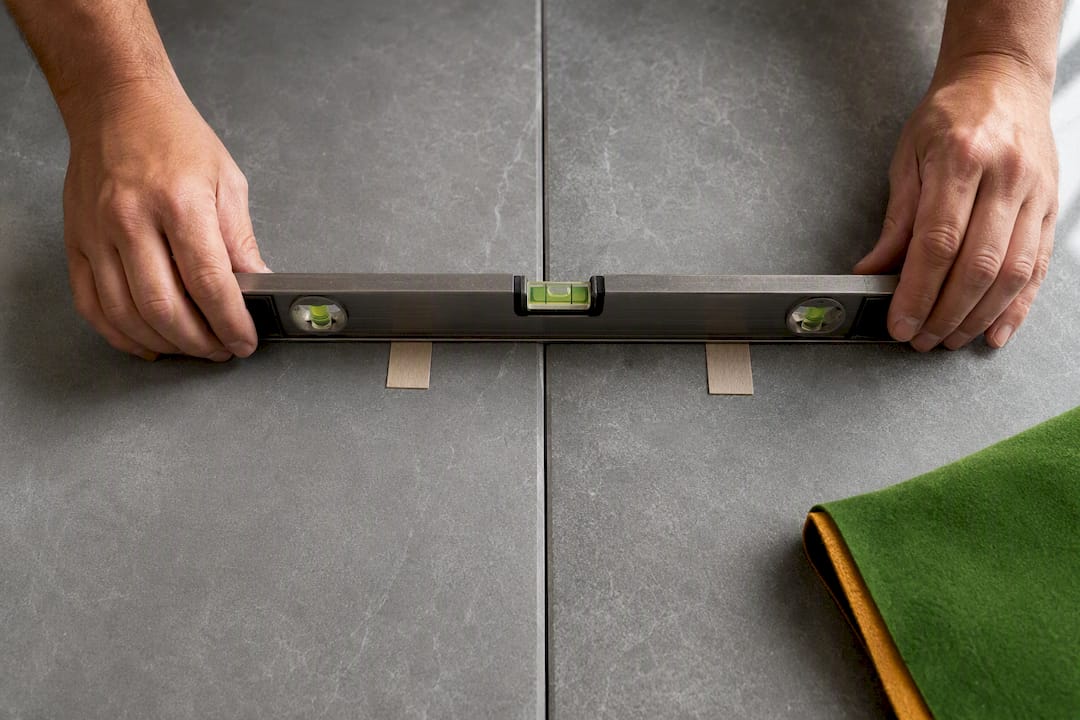
Felt that’s more than a few years old, or that tore during teardown, is usually worth replacing rather than patching. A patch job shows up as a visible seam every time the cloth catches light at an angle, and refelting an entire table typically costs less in the long run than repeated patch repairs.
Before you call the table finished:
- Check rail tension by tapping a ball off each cushion, listening for consistent bounce.
- Confirm pocket alignment matches the original photos you took before disassembly.
- Decide whether to bolt the table down permanently or leave it free standing, depending on your flooring and whether another move is likely.
When Should You Hire Pool Table Movers Instead?
Call professional pool table movers the moment any of these show up: multi-piece slate over roughly 400 pounds combined, more than one flight of stairs, doorways or hallways under 36 inches, or a helper count under three reliable adults.
Questions worth asking before you hire:
- How many pool table moves has this crew handled in the last year?
- What valuation or insurance coverage applies if the slate cracks in transit?
- What’s the minimum crew size assigned to this job, and does it change for stairs?
- Can you provide references from a similar slate move?
The FMCSA’s consumer guidance lays out exactly what movers owe you in writing, including valuation coverage, and it’s worth reading before you sign anything. A credible quote itemizes disassembly, materials, stair or crane surcharges, and insurance as separate line items. Vague, all-in flat quotes with no breakdown are the biggest red flag for an under-equipped or under-insured operation.
What Movers Get Wrong About Slate, and What We Watch For
Most DIY damage traces back to rushing the slate step, not the rails or felt. People underestimate how a 300-pound slab shifts on a hand truck versus how it behaves in a doorway turn. Carriers are vetted specifically to confirm crew size and rigging plans before move day, not after something’s cracked.
— Info
How Move Craft Handles Pool Table and Specialty Moves
The coordination of the vetted carrier and confirmation of crew size and equipment happens before your slate ever leaves the room, so you’re not gambling on whether the mover showing up actually knows how to handle a three-piece bed.

Unlike a flat-rate mover who quotes blind over the phone, the job is scoped first: disassembly and reassembly, packing materials, stair or crane surcharges, and valuation options, all itemized before you commit to anything. That kind of planning matters more with heavy transport logistics loads, and coordinated scheduling is exactly why transport management platforms exist in the freight world, the same logic applies at the scale of one heavy table. Confirming coverage in writing also protects you if something goes wrong, and Move Craft can walk you through full valuation coverage options so you know exactly what’s covered before the truck arrives.
If your table has slate, stairs, or a route about which you’re not confident, get a scoped quote through Move Craft’s full-service relocation coordination and find out what a properly equipped crew actually costs for your specific move.
Sources
Lowe’s disassembly guide covers the packing and disassembly sequence in more visual detail. Angi’s cost breakdown supports every price figure in this guide. FMCSA’s mover checklist explains your rights when hiring. U-Haul’s heavy-item tips apply directly to equipment choices for slate.
- How To Move A Pool Table — Lowe’s
- How Much Does It Cost to Move a Pool Table? 2026 Data — Angi
- Ready to Move — FMCSA
- How to Move a Gun Safe — U-Haul