
East Coast relocations are defined by a collision of extreme weather, layered financial obligations, and infrastructure constraints that no other region in the United States combines at the same scale. Relocation specialists use the term “residential relocation complexity” to describe this cluster of challenges, and the East Coast is its most concentrated example. Whether you are moving to coastal North Carolina, the New York metro area, or anywhere along the I-95 corridor, the variables stack up fast. Understanding why east coast relocations are complex before you sign a lease or close on a home is the single most valuable thing you can do.
Why are East Coast relocations so complex?
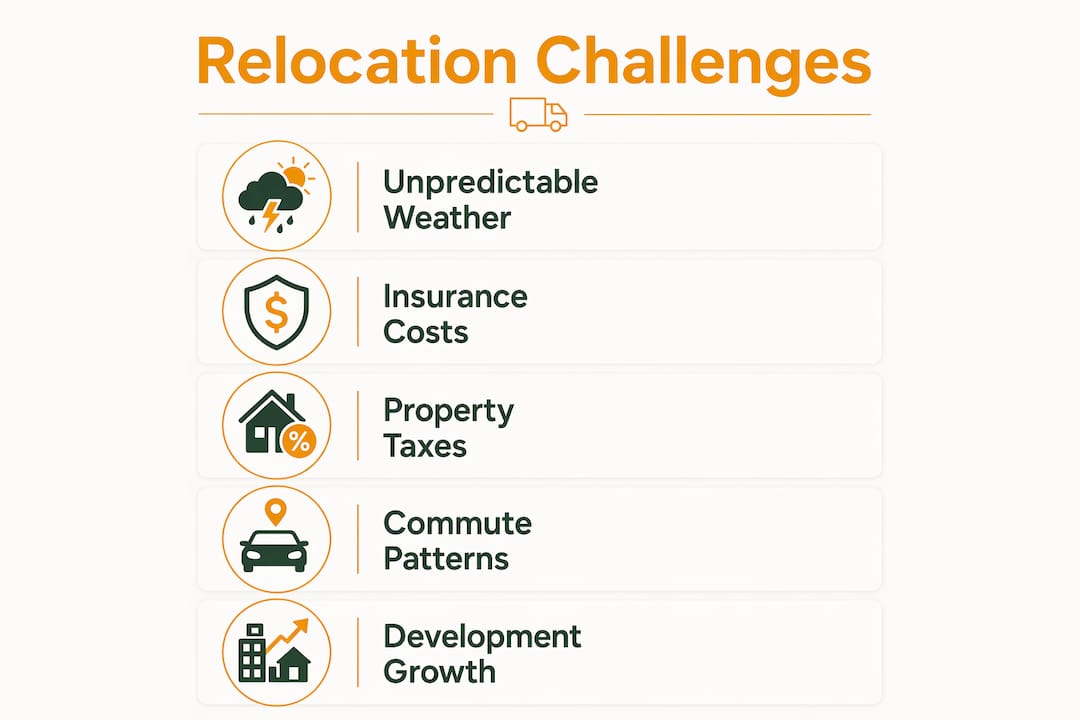
East Coast relocation complexity is not one problem. It is five problems running simultaneously: unpredictable weather, aging infrastructure, multi-policy insurance requirements, wide property tax variation, and commute realities that online maps simply do not show. Each factor alone is manageable. Together, they create a moving experience that routinely surprises even experienced relocators.
The region stretches from Maine to Florida, covering dense urban cores, coastal flood zones, mountain corridors, and sprawling suburban rings. That geographic range means no two moves share the same risk profile. A renter moving from Chicago to Boston faces a completely different set of challenges than a homebuyer relocating from Texas to Wilmington, North Carolina. The common thread is that both will encounter more variables than they planned for.
How does extreme weather affect East Coast moving logistics?
East coast weather moving challenges are not seasonal inconveniences. They are schedule-breaking events with direct financial consequences.
In 2026, heat index peaks of 105–115°F along the I-95 corridor reduced Amtrak speeds and canceled routes, disrupting household goods transit across multiple states. That disruption cascades: when a rail shipment delays, storage fees accumulate, temporary housing extends, and closing timelines shift.
The infrastructure damage compounds the scheduling problem. Extreme heat causes pavement blowouts on major truck routes, which triggers load restrictions on secondary roads. Moving trucks reroute, adding hours and fuel costs to what should be a straightforward delivery. Extreme weather events do not just disrupt moving day. They influence costs and timing across the entire East Coast corridor in ways that are difficult to predict even two weeks out.
The practical impact on your move:
- Heat delays: Moving crews face mandatory rest periods during heat advisories, extending labor hours and cost.
- Route changes: Pavement load limits force trucks onto longer, slower roads, adding delivery time.
- Transit cancellations: Amtrak service reductions affect anyone shipping vehicles or specialty items by rail.
- Storage overruns: Delayed deliveries push renters and buyers into extended hotel or temporary housing stays.
Pro Tip: Book your moving date with a two-day buffer on either side during june through september. East Coast heat advisories can appear with 48 hours’ notice and derail a fixed-date move entirely.
Why do insurance, taxes, and regulations complicate East Coast homebuying?
The financial complexity of East Coast homebuying goes well beyond the purchase price. Coastal properties frequently require three or more separate insurance policies: standard homeowner’s coverage, wind and hail coverage, and flood insurance tied to FEMA flood zone maps.
Two structurally similar homes located just blocks apart can carry vastly different insurance costs because of flood zone mapping differences. One home sits in Zone X, which carries minimal flood risk and low premiums. The neighboring home sits in Zone AE, which requires mandatory flood insurance and can add thousands of dollars annually to ownership costs. This is not a detail your listing agent will volunteer. You have to ask, and then verify independently.
Property taxes add another layer of unpredictability. Counties like Pender, New Hanover, and Brunswick in North Carolina each carry distinct tax rates and reassessment schedules. A home that appears affordable at purchase can become significantly more expensive after a county revaluation. Buyers relocating from states with stable or capped property tax systems are often blindsided by this.
The Northeastern housing market delivers its own version of financial shock. Salary increases of around 20% rarely offset housing cost increases of 40–50% when relocating from southern or midwestern markets to the Northeast. That gap shows up in monthly cash flow within the first year, not just on paper during the planning phase.
Older housing stock in northern metro areas creates additional insurance costs. Pre-1980 construction often requires specialized coverage for outdated electrical systems, aging roofs, and original plumbing. Heating costs in harsh northeastern winters add another line item that renters from warmer climates consistently underestimate.
Pro Tip: Before you make an offer on any East Coast coastal property, request the current flood zone designation and get an independent insurance quote. Do not rely on the seller’s existing premium as a benchmark. Your lender, your elevation certificate, and your insurer will each calculate risk differently.
For a deeper look at protecting your belongings during a long-distance move, the moving insurance guide from Movecraftmoving covers the key policy types and what each actually protects.
How do development patterns and commutes affect relocation success?
Choosing a home before understanding your commute and local traffic patterns is the single most common relocation mistake on the East Coast. Online listings show square footage and school ratings. They do not show that your grocery store is across a drawbridge that opens on a fixed schedule, or that your 12-mile commute takes 55 minutes during peak hours.
East Coast coastal communities present a specific commute challenge that inland buyers rarely anticipate. Communities like Hampstead and Surf City in North Carolina require crossing bridges and navigating traffic bottlenecks for routine errands. Healthcare visits, school pickups, and grocery runs all involve longer drives than newcomers expect. That daily friction compounds over months and is a leading driver of relocation regret.
The development pattern gap between northern and southern East Coast markets creates another layer of confusion for relocating buyers:
- Dense older suburbs (common in the Northeast) feature smaller lots, shared walls, and established infrastructure. Inspections focus on aging systems, and HOA structures are rare.
- New construction coastal communities (common in the Southeast) offer larger lots and modern systems but come with variable HOA fees, construction timelines, and community amenities that are still being built out.
- Bridge-dependent coastal towns require buyers to factor crossing times into every daily routine, not just the morning commute.
- Urban core neighborhoods in cities like Charleston, Baltimore, and Philadelphia carry historic preservation rules that restrict renovations and add permitting timelines.
East Coast maps and listings consistently mask the underlying commute and logistic challenges that only become visible after you live in an area for a few weeks. The fix is spending time in the neighborhood at different hours before you commit.
Pro Tip: Drive your intended commute route on a Tuesday morning at 7:30 AM and again on a Friday afternoon at 5:00 PM. Those two data points will tell you more than any online traffic estimate.
What are the most common East Coast relocation mistakes?
The challenges of east coast moving cluster around a predictable set of errors. Most are avoidable with early research and honest budgeting.
- Ignoring insurance complexity: Buyers focus on the purchase price and skip the insurance audit. Flood zone status, wind exposure ratings, and roof age all affect annual premiums by amounts that can change the affordability of a property entirely.
- Underrating commute time: Local realities like bridge access and peak hour congestion create daily surprises for relocated buyers who chose homes based on map distance rather than drive time.
- Budgeting on base price alone: The total cost of living on the East Coast includes property taxes, multi-policy insurance, higher utility costs, and in many areas, HOA fees. Evaluating a home on purchase price without modeling these ongoing costs produces a budget that fails within 18 months.
- Moving during peak weather windows: June through september on the East Coast combines hurricane season, extreme heat advisories, and peak traffic volume. Scheduling a move during this window without contingency planning is a direct path to delays and cost overruns.
- Skipping on-the-ground research: Salary increases rarely offset the cumulative higher taxes, insurance, and cost-of-living on the East Coast. Relocators who rely on remote research consistently underestimate what they will actually spend in year one.
The correction for all of these mistakes is the same: plan earlier, research deeper, and budget for the total cost of ownership rather than the sticker price.
Key Takeaways
East Coast relocations are complex because weather, insurance, taxes, commute realities, and development patterns all create compounding financial and logistical risks that require early, thorough planning to manage.
| Point | Details |
|---|---|
| Weather disrupts schedules | Heat index peaks of 105–115°F cause transit cancellations and truck reroutes that add cost and delay. |
| Insurance requires multiple policies | Coastal properties often need separate wind, flood, and homeowner policies with costs tied to flood zone maps. |
| Property taxes vary by county | Reassessment schedules differ across East Coast counties, creating unpredictable annual cost increases. |
| Commute realities are hidden online | Bridge crossings, drawbridge schedules, and peak-hour congestion only become visible through on-the-ground research. |
| Total cost exceeds sticker price | Salary increases of 20% rarely cover housing cost increases of 40–50% when moving to Northeastern markets. |
What I’ve learned after watching hundreds of East Coast moves go sideways
Most relocators spend 90% of their planning energy on the home search and 10% on everything else. That ratio is exactly backward for East Coast moves.
The buyers I’ve seen struggle most are the ones who locked in a home before they understood the neighborhood. They found a great price, fell in love with the photos, and signed a contract before they drove the commute once. Six months later, they are crossing a drawbridge twice a day for groceries and paying flood insurance premiums they never modeled. The house is fine. The life around it is not what they expected.
Successful relocations use a slow realization strategy, evaluating long-term factors like healthcare access and zoning two to ten years ahead, not just immediate aesthetics. That sounds like a long horizon, but it is the difference between a move you celebrate and one you quietly regret. The East Coast rewards patience in the research phase and punishes speed.
The financial shock piece is real and underreported. Relocators from the South and Midwest consistently arrive in Northeastern markets believing their salary bump covers the gap. It does not. The cumulative weight of higher taxes, multi-policy insurance, and older housing maintenance costs hits differently when you are living it versus modeling it on a spreadsheet.
My honest advice: get expert guidance before you start the home search, not after you have already fallen in love with a property. The planning phase is where complexity is manageable. Once you are under contract, your options narrow fast.
— Info
How Movecraftmoving handles the complexity of East Coast moves
East Coast relocation logistics require coordination across weather windows, insurance timelines, transit routes, and local regulations. Movecraftmoving manages that coordination so you do not have to.

Movecraftmoving connects you with vetted carriers and logistics professionals who know the I-95 corridor, coastal flood zone requirements, and the transit disruptions that derail poorly planned moves. The team handles vendor coordination, timing contingencies, and route planning with the kind of detail that protects your budget and your belongings. The vendor coordination checklist for 2026 is a practical starting point for anyone planning a complex East Coast relocation. For personalized planning support, contact Movecraftmoving directly and get a relocation strategy built around your specific timeline and destination.
FAQ
Why is moving to the East Coast more complicated than other regions?
The East Coast combines extreme weather, coastal insurance requirements, aging infrastructure, and wide property tax variation in a way no other region does. These factors interact and compound, making every move more variable than a standard domestic relocation.
What insurance do I need for an East Coast coastal property?
Most coastal East Coast properties require at least three separate policies: standard homeowner’s insurance, wind and hail coverage, and flood insurance tied to your FEMA flood zone designation. Two homes on the same street can carry dramatically different premiums based on flood zone mapping.
How do I avoid the financial shock of relocating to the Northeast?
Model the total cost of ownership before you commit, including property taxes, multi-policy insurance, utilities, and HOA fees. A 20% salary increase rarely covers a 40–50% increase in housing costs when moving from southern or midwestern markets to the Northeast.
When is the worst time to schedule an East Coast move?
june through september combines hurricane season, extreme heat advisories, and peak traffic volume on the I-95 corridor. Scheduling during this window without a two-day buffer and contingency plan significantly increases the risk of delays and cost overruns.
How do I research a neighborhood before relocating to the East Coast?
Drive the commute route at peak hours, visit the area on a weekday and a weekend, and research bridge crossing schedules if the community is coastal. Online listings and maps consistently underrepresent commute friction and daily logistical challenges.
Recommended
- Data Center Relocation Service: What IT Leaders Must Know – Move Craft Moving Solutions LLC
- Commercial Move Vendor Coordination Checklist for 2026 – Move Craft Moving Solutions LLC
- How to Avoid Long Distance Moving Scams in 2026 – Move Craft Moving Solutions LLC
- Residential Move Walkthrough: What Every Renter Must Know – Move Craft Moving Solutions LLC