
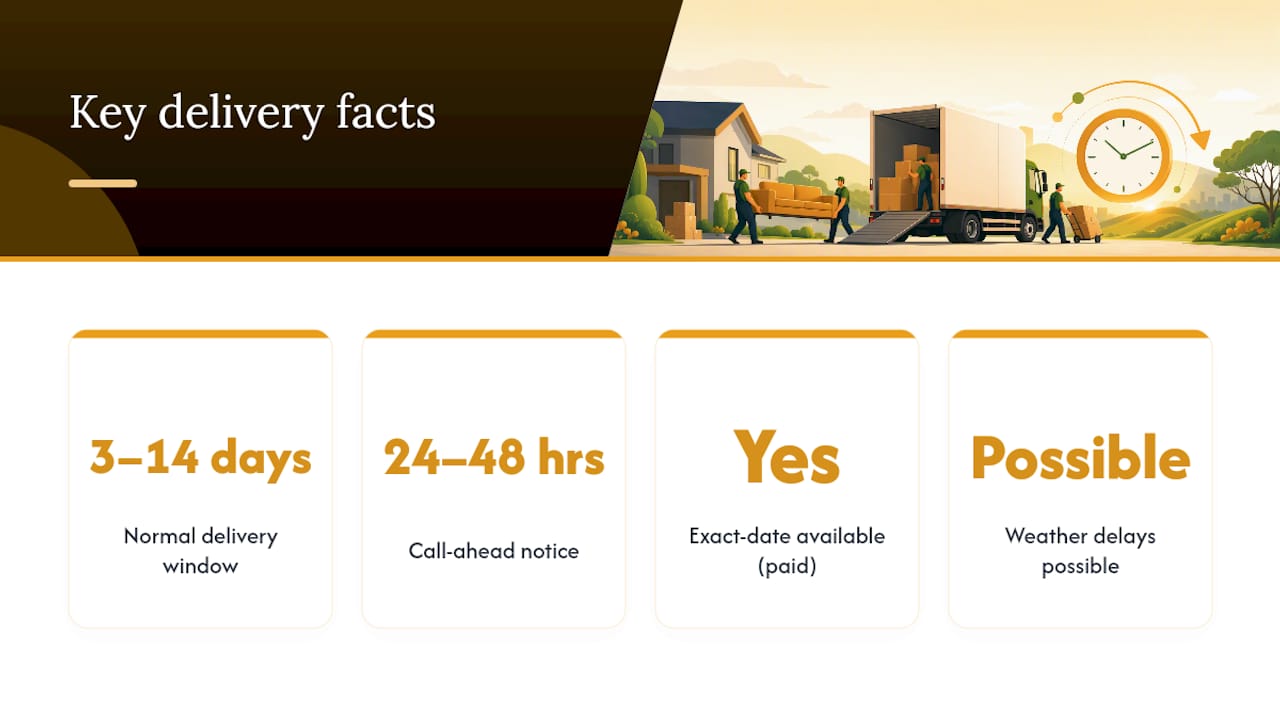
A moving delivery window, or delivery spread, is the range of dates a carrier gives you for when your shipment will actually arrive rather than a single locked-in day. On long-distance moves, that spread commonly runs 3 to 14 days, depending on distance and how many other shipments are riding on the same truck. Once your driver knows the route sequence, most companies call 24 to 48 hours ahead of actual delivery.
Two things to do right now, before pickup day even arrives:
- Ask your mover, in writing, for the specific delivery spread tied to your order for service.
- Confirm who can accept the shipment if you can’t be there personally, and give the mover a backup contact.
Key Takeaways
A moving delivery window is a routing tool, not a convenience feature, and understanding that changes how you plan around it.
| Point | Details |
|---|---|
| Definition matters | A delivery window is a multi-day spread, typically 3 to 14 days on long-distance moves, not a fixed date. |
| Call-ahead is standard | Expect a 24 to 48 hour call-ahead notice once your truck’s route sequence is finalized. |
| Consolidation drives length | Shared loads, peak season, and low-traffic lanes all widen your realistic window. |
| Paperwork protects you | Get the delivery spread, storage terms, and redelivery fees in writing on your bill of lading. |
| Movecraftmoving reduces uncertainty | Movecraftmoving coordinates with vetted carriers to track shipments and pursue first-available status on your behalf. |
Table of Contents
- How Movers Set Your Moving Delivery Window
- Why Delivery Windows Vary So Much From Move to Move
- Getting Ready for the Call and Managing Acceptance
- How to Get a Firmer Date or a Narrower Window
- What to Check in Your Paperwork Before Move Day
- Why a Coordinated Approach Changes the Delivery Math
- When to Pay for Certainty and When to Live With the Spread
- How Movecraftmoving Takes the Guesswork Out of Delivery Timing
- Frequently Asked Questions
- Sources
How Movers Set Your Moving Delivery Window
Long-distance carriers rarely run point-to-point like a package courier. Instead, they use rolling-route scheduling: a single truck picks up multiple households along a corridor, then delivers them in a sequence that makes geographic sense. Your exact date gets refined only after pickup, once the driver knows what’s actually loaded and in what order stops make sense.
This is why the initial quote gives you a spread, not a date. Dispatch is solving a routing puzzle with variables that don’t resolve until the truck is loaded.
A few forces shape that puzzle:
- Consolidation: your goods likely share space with other shipments, so the truck’s schedule depends on everyone’s pickup timing, not just yours.
- Lane volume: high-traffic corridors like Los Angeles to New York get run more often, which can tighten the realistic window.
- Driver hours: federal hours-of-service rules cap how long a driver can be behind the wheel each day, which limits how fast a truck can cover ground no matter how badly everyone wants an early arrival.
Pro Tip: Ask your coordinator whether your shipment is riding solo or consolidated. A dedicated truck gives you a materially tighter window than a shared load, and it’s worth knowing which one you’re paying for.
One detail surprises most first-time movers: the window on your original estimate often gets narrower, not wider, once the truck actually loads. Dispatch has more information after pickup than before it, so the spread you see on your contract three weeks out is a planning estimate, and the one you get after loading is closer to reality.
Why Delivery Windows Vary So Much From Move to Move
Distance is the obvious variable, but it’s rarely the only one that stretches or shrinks your window. A regional move from Ohio to Illinois behaves nothing like a coast-to-coast haul from Seattle to Miami, and even two coast-to-coast moves can land on very different spreads depending on what else is happening around them.
Here’s what actually moves the needle:
- Distance and lane traffic: popular corridors get run more frequently, which can narrow your window; remote or low-demand routes often widen it.
- Full-truck versus consolidated loads: a dedicated shipment skips the multi-stop routing entirely, which is why container-based or dedicated-haul services tend to run tighter than standard van-line consolidation.
- Peak season demand: summer moves (roughly May through September) mean fuller trucks and longer booking queues, which pushes spreads toward the longer end.
- Weather, traffic, and mechanical issues: a snowstorm in Denver or a breakdown outside Amarillo can shift every subsequent stop on that truck’s route.
- Access restrictions: a walk-up apartment with no freight elevator, a gated community requiring an escort, or a narrow street that can’t fit a full-size trailer all add time on delivery day itself.
- Storage-in-transit: if your goods sit in a warehouse before final delivery, that adds its own scheduling layer on top of the road time.
Distance sets the floor. Everything else on that list decides how far above the floor you actually land, and access issues at your new address are the one variable almost entirely in your control.
Getting Ready for the Call and Managing Acceptance
The best way to make delivery day painless is to remove every unknown a dispatcher or driver might hit at your new address. That starts weeks before the truck shows up, not the night before.
- Put access details in writing. Email your coordinator building rules, gate codes, parking restrictions, or elevator reservation requirements, so nothing surprises the driver on arrival.
- Pack an essentials box. Keep IDs, medications, chargers, and a change of clothes with you, separate from the shipment, since your window could land on either end of the spread.
- Name a backup acceptor. If you can’t guarantee being there for every possible day in the spread, give the mover a second contact who’s authorized to accept delivery on your behalf.
- Use the call-ahead window deliberately. When that 24 to 48 hour call comes in, confirm the exact arrival time, ask whether a deposit or final payment is due on delivery, and verify the crew size matches what was quoted.
- Send a short pre-delivery checklist to your mover. Confirm parking availability, elevator access, and any building notice requirements at least 48 hours out.
Pro Tip: Save every text and email from your mover about timing. If your window slips, that paper trail becomes your evidence for any reimbursement claim.
How to Get a Firmer Date or a Narrower Window
If a wide spread makes you nervous, you have real options, though every one of them comes with a trade-off worth understanding before you pay for it.
- Request “first available delivery.” Ask your coordinator to flag your shipment for priority handling as soon as capacity opens, and get that request confirmed in writing on your order for service.
- Consider expedited or dedicated service. Paying for a dedicated truck removes the multi-stop routing variable entirely, which is the single biggest lever for tightening your window.
- Understand why exact-date guarantees cost more. Promising a specific day forces the carrier to accept idle or empty miles elsewhere on the route, and that inefficiency gets priced into your bill.
- Accept that some consolidation is unavoidable. On lower-volume lanes, a dedicated truck may not be commercially available at any price, and a wider spread becomes the realistic operating reality rather than a negotiating failure.
What to Check in Your Paperwork Before Move Day
Your delivery spread should appear in writing on your order for service or bill of lading, not just in a verbal quote. Confirm the final delivery date, any storage-in-transit terms, and redelivery fees before you sign.
- Get the delivery spread and final date in writing, not verbal.
- Ask about storage-in-transit fees if delivery gets delayed on your end.
- Keep hotel and meal receipts. Missing the written final date can qualify you for reimbursement depending on the mover’s policy.
Why a Coordinated Approach Changes the Delivery Math
Movecraftmoving vets every carrier partner for on-time performance before a shipment ever gets assigned, and that vetting is what lets a coordinator push for first-available status and track a truck’s progress instead of leaving you to call dispatch cold.
A carrier relationship built on repeat volume carries more weight when requesting priority handling than a single one-off booking ever will. That leverage is exactly what a coordinated approach is designed to use on your behalf.
When to Pay for Certainty and When to Live With the Spread
If your move date is flexible, a standard consolidated spread saves real money and rarely causes problems. If you’re closing on a house or starting a new job on a fixed date, paying for dedicated or expedited service is the cheaper mistake to avoid.
How Movecraftmoving Takes the Guesswork Out of Delivery Timing
A wide delivery spread stops feeling risky once someone is actually tracking your shipment instead of you calling a dispatcher and hoping for an update. That’s the gap Movecraftmoving closes: we match you with vetted carriers and stay on top of your shipment’s status from pickup through final delivery, so you’re not the one chasing answers.

When you request a quote, ask three questions that separate a real coordination service from a simple lead form: What’s my realistic delivery spread for this specific lane? Is first-available or dedicated service on the table, and what does it cost? Who do I call directly if my window changes?
If you want a clear plan before your goods ever leave the driveway, start with our relocation checklist to see what needs to happen before delivery day, or head straight to our page on minimizing disruption during your move to get a coordinated quote started.
Frequently Asked Questions
What’s a normal delivery window for a long-distance move?
Most cross-country shipments fall somewhere in a 3 to 14 day spread, with the exact range depending on distance, season, and whether your load is consolidated or dedicated.
How much notice will I get before the truck arrives?
Once dispatch finalizes the route sequence, most carriers give a 24 to 48 hour call-ahead before actual delivery.
Can I request a specific delivery date instead of a window?
Yes, through expedited or dedicated service, but expect to pay more since exact-date promises create scheduling inefficiencies the carrier has to absorb.
What happens if my mover misses the delivery window?
Depending on the mover’s policy and your order for service, you may be eligible for reimbursement of documented living expenses if delivery misses the final written date.
Does weather affect my delivery window?
Yes. Storms, road closures, and mechanical delays on one stop can shift every appointment scheduled after it on that truck’s route.
Sources
- Moving Company Delivery Windows: How Do They Work? — FreightWaves
- Moving
- The Ultimate Long-Distance Moving Timeline — PODS
Recommended
- Long Distance Moving Process Overview: 2026 Guide – Move Craft Moving Solutions LLC
- Commercial Moving Timeline: What Businesses Need to Know – Move Craft Moving Solutions LLC
- Your Relocation Checklist for a Move Without Surprises – Move Craft Moving Solutions LLC
- Last-Minute Local Move Booking Guide: Act Now – Move Craft Moving Solutions LLC