
A fine-art-aware move comes down to three things: a mover with verified operating authority, per-piece documentation (a signed condition report plus timestamped photos), and transit insurance that matches the piece’s real value instead of its weight. Before you book anyone, check the carrier’s status on FMCSA SAFER, request a certificate of insurance, and ask exactly how they’ll document your piece at pickup. A coordinator can handle that vetting for you if you’d rather not chase paperwork yourself.
TL;DR:
- Verify the mover’s license through FMCSA SAFER and request a certificate of insurance before booking, emphasizing real coverage matching the artwork’s value.
- Confirm the mover’s experience with fine art, including references from galleries or conservators, and ensure they generate signed condition reports with photographs at pickup and delivery.
- Use appropriate packing methods based on distance and fragility, avoiding labeling crates as “fragile” to reduce security risks, and photograph pieces under raking light for baseline surface condition.
- Insist on climate-controlled vehicles with proper securing equipment, and inspect the artwork against the condition report at delivery; document any damages immediately.
- Plan at least several weeks ahead for complex or large moves, and consider hiring a coordinator to vet vendors, manage documentation, and coordinate logistics, especially with high-value or fragile pieces.
Table of Contents
- How Do You Vet a Mover for Fine Art Moving?
- What’s the Right Way to Pack and Crate Artwork?
- What Transport and Handling Specs Should You Confirm?
- How Should Insurance and Documentation Work?
- How Far Ahead Should You Plan a Fine Art Move?
- Why a Coordinator Approach Reduces the Risk
- Does Fine Art Need Extra Security During Transport and Storage?
- When Should You Bring in a Conservator or Art Handler?
- How Much Does Fine Art Moving Cost?
- What This Checklist Gets Right (And What Most Advice Misses)
- Get a Fine Art Assessment Before You Book Anyone
- Sources
- FAQ
How Do You Vet a Mover for Fine Art Moving?
Most moving companies can wrap furniture. Far fewer can tell you, without hesitating, how they’d pack a gilded frame or a stretched canvas with surface impasto. That gap is where vetting matters most.
Start with the legal basics. Any interstate mover in the United States needs valid FMCSA operating authority and a USDOT number, and you can check that status directly through FMCSA’s SAFER system in a few minutes. If a company can’t produce a USDOT number on request, stop the conversation there. Movecraftmoving’s own breakdown of interstate moving compliance walks through what those numbers actually mean and why skipping the check costs people money later.
Beyond the license, you need to confirm specific process knowledge, not just general reassurance:
- Ask for a certificate of insurance (COI) naming your address as an additional insured for the move dates.
- Request references from past clients who shipped comparable pieces, or ask whether the crew has worked with conservators, galleries, or auction houses.
- Confirm they generate a written condition report with photos at pickup and delivery, and ask who signs it.
- Get packing method, crate specifications, crew size, and climate control commitments in writing before deposit.
- Ask about background checks and training for anyone who will physically handle the artwork.
Vague answers on any of these are a red flag. So is a quote given without a photo survey or in-person walkthrough. A mover who can’t describe their crating process beyond “we wrap it well” hasn’t done this before with anything valuable. Movecraftmoving’s guide to vetting local movers has additional screening questions worth adding to your list, and the broader trust checklist at how to pick a moving company covers the reputational side.
Pro Tip: Ask the mover to name a conservator or gallery registrar they’ve worked with. A real answer, with a name attached, tells you more than any sales pitch.
What’s the Right Way to Pack and Crate Artwork?
Not every piece needs a custom crate, and building one for a painting moving across town wastes money. The decision hinges on distance, fragility, and value.
Soft packing, glassine or acid-free paper, foam corners, and a sturdy box, works fine for a stable, moderately valued piece on a short, local move. Custom crating becomes necessary once you’re shipping long distance, moving something fragile or high value, or dealing with anything irregular in shape like a sculpture. Chubb’s fine art moving guidance treats this distance-and-fragility threshold as the standard test movers should apply before quoting a job.
Materials matter as much as the decision to crate. A proper setup uses:
- Acid-free paper directly against painted or printed surfaces, never plastic, which traps moisture.
- Mirror cartons for anything glazed or framed under glass.
- Handling frames or travel frames for canvases with heavy impasto, so nothing touches the paint surface.
- Sealed wooden crates with skids and buckle straps for long-distance or high-value transit.
- Acid-free tissue and rigid mounts for textiles, kept flat rather than folded.
Sculptures need individual point-of-contact padding at their most vulnerable spots, usually the base or any thin extensions. Glass gets taped in a grid pattern and boxed separately from its frame whenever possible.
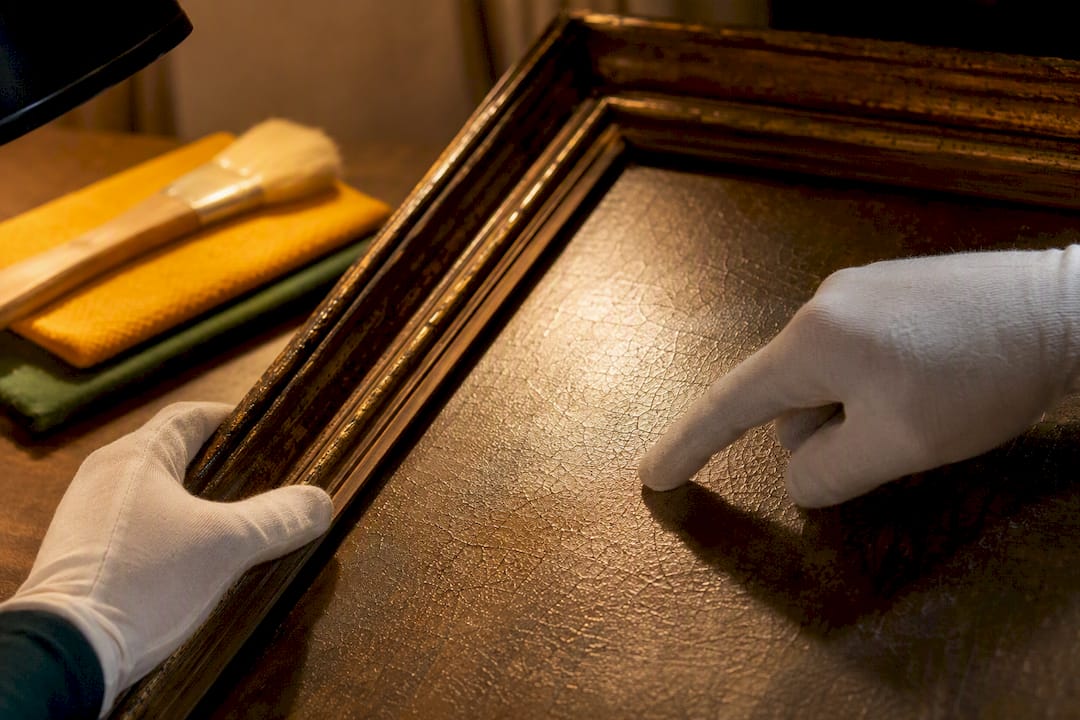
One detail that surprises people: crates and cartons should never be labeled with contents like “fine art” or “fragile, valuable.” That’s a security risk during transit and storage. Mark only orientation (“this side up,” “face forward”) and a numbered inventory code that matches your condition report. Photograph each piece under raking light before packing begins. That angled lighting reveals surface texture and existing damage that flat lighting hides, and it becomes your baseline if a claim comes up later.
What Transport and Handling Specs Should You Confirm?
Move day is where good planning either holds or falls apart. Confirm vehicle specs before the truck shows up, not after it does.
Ask for a climate-controlled vehicle with air-ride suspension, which absorbs road vibration far better than standard leaf-spring trucks. Confirm working locks, a lift gate for heavy crates, and enough strapping points to secure everything to the wall rather than letting it shift loose in transit. For long hauls, Chubb’s transit guidance recommends two drivers so the vehicle never sits unattended overnight at a truck stop.
On the handling side, a few rules should be non-negotiable:
- Crew wears clean cotton gloves and removes rings, watches, and tool belts before touching any piece.
- Canvases and framed works travel upright, never flat, to avoid pressure on the surface.
- Heavier crates load first and get secured to the truck wall, not stacked loosely on top of lighter ones.
- Nothing gets carried solo if it’s larger than one person can see around clearly.
At delivery, inspect the packaging itself before anything comes out of it. Compare the piece against your condition report line by line, and if lighting or time doesn’t allow a full inspection, write “received uninspected” on the delivery paperwork rather than signing off blind. That single phrase protects your claim rights later.
How Should Insurance and Documentation Work?
Here’s the gap that catches people off guard: standard moving company valuation coverage and most homeowner policies price fine art by weight, not worth. A ten-pound painting insured at $0.60 per pound gets you six dollars if it’s destroyed, regardless of what you paid for it.
The fix is asking for all-risk, agreed-value transit coverage, either through the mover’s third-party insurer or by scheduling the piece on your own fine-art rider ahead of the move. Agreed-value means you and the insurer settle on a dollar figure before anything happens, so there’s no argument over market value after a loss.
Documentation is what makes a claim collectible rather than contestable. Keep these on file:
- Pre-move and post-move high-resolution photographs, ideally the same angles and lighting.
- Signed condition reports from both pickup and delivery.
- The bill of lading and your certificate of insurance.
- Separate storage insurance confirmation if the piece sits in a warehouse between pickup and final delivery.
If you spot damage, preserving the evidence immediately matters more than anything else: photograph the damage before moving the piece again, keep every scrap of original packing material, note the condition directly on the delivery waybill, and contact both the mover and insurer the same day. Waiting even a week to report weakens a claim.
Pro Tip: Ask specifically who insures the piece during any intermediate storage, not just during the drive. Chain-of-custody gaps most often happen at the warehouse, not on the road.
How Far Ahead Should You Plan a Fine Art Move?
Lead time scales with complexity, and rushing any of these steps is where damage claims originate.
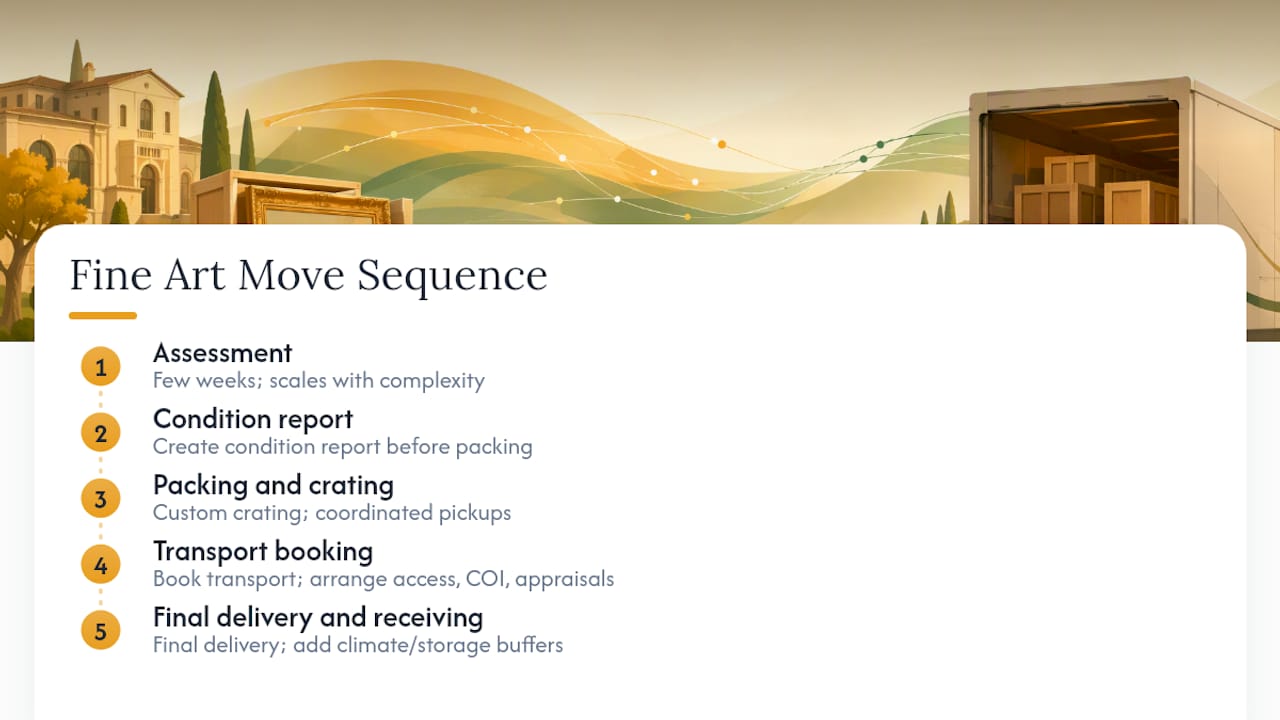
Planning lead times vary with complexity. A single piece usually requires a few weeks for assessment, crating, and scheduling. Small collections need additional weeks to allow for custom crate builds and coordinated pickups. Large or complex moves, including multiple rooms, sculptures, or those needing climate-controlled storage, require more extended planning periods.
The sequence itself should follow assessment, then condition report, then packing and crating, then transport booking, then final delivery and receiving. Building access requirements, COI submissions to a receiving building’s management, and appraisal appointments all need to land inside that window, per fine art logistics planning guidance, not squeezed in afterward. If your move crosses extreme climates or needs a storage bridge between homes, add buffer time on both ends.
Why a Coordinator Approach Reduces the Risk
Vetting one mover is manageable. Vetting a mover, a crater, an insurer, and a storage facility, while also holding down a job, is where most people cut corners they shouldn’t.
Movecraftmoving operates as a relocation strategist rather than a single carrier, built around what the company describes as radical transparency and meticulous respect for every item you own. Some coordinators vet carrier partners for integrity and consistency before connecting a client to them, so the screening work described above happens before you ever see a quote.
In practice, that means one point of contact handling COI collection, condition-report oversight, scheduling, and the insurance conversation, instead of you managing four separate vendors on four separate timelines.
Does Fine Art Need Extra Security During Transport and Storage?
Yes, and it’s a different kind of security than general household goods require. Value concentrated in a small, portable object is exactly what attracts risk, so the handling protocols above should be paired with security steps most standard moves skip entirely.
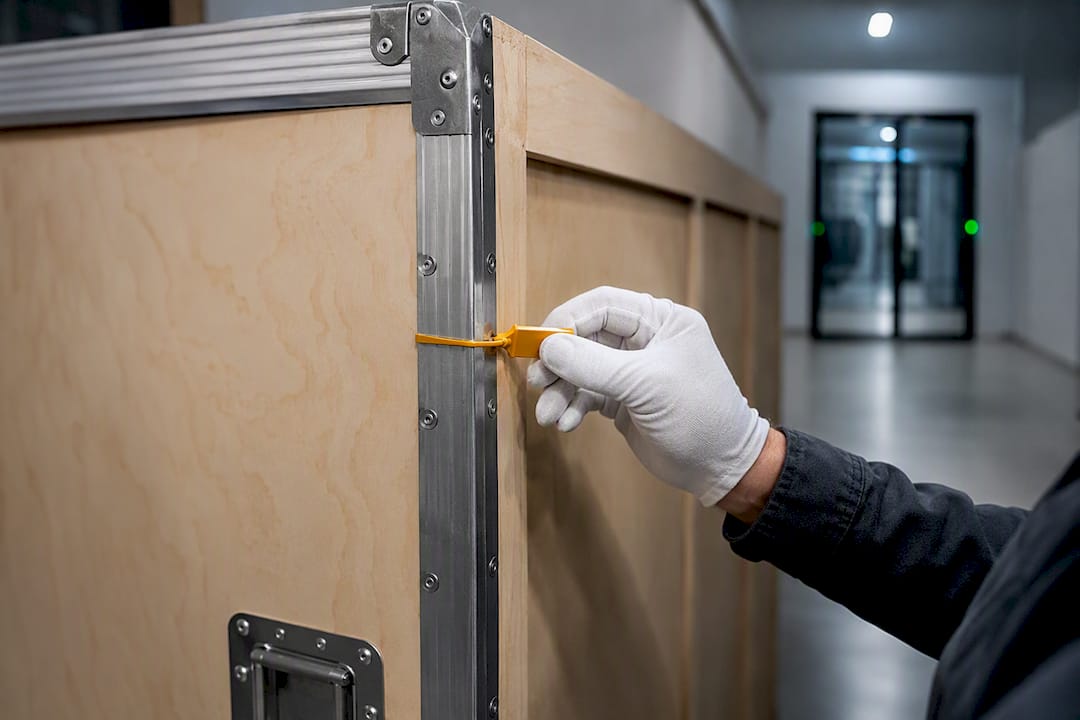
Tamper-evident seals on crates let you confirm nothing was opened between pickup and delivery. A broken seal on arrival is an immediate flag to inspect before signing anything. GPS tracking on the transport vehicle gives you and your mover a real-time location during transit, which matters most on multi-day interstate hauls where the truck may sit overnight.
Inside a warehouse, ask specifically how access is controlled: who has keys, whether the facility logs entries, and whether cameras cover the storage area itself, not just the loading dock. A facility that stores fine art alongside general household goods without a separate secured section is worth questioning further.
The labeling rule from the packing section applies here too. Never let a crate or storage unit be marked in a way that advertises high value to anyone walking past it. Inventory should live on a manifest tied to a coded reference, not on the outside of the box. Combine that with the chain-of-custody documentation covered earlier, and you get a record that shows exactly who touched the piece, when, and under what security conditions, which matters as much for deterring theft as for supporting an insurance claim if something does go wrong.
When Should You Bring in a Conservator or Art Handler?
Not every piece needs a specialist, but some clearly do: anything with active flaking paint, a damaged frame joint, unstable canvas tension, or material that’s simply old and brittle enough that normal handling risks harm.
The mover you hire should have referral relationships already in place. Ask directly whether they’ve worked alongside conservators, museum registrars, or auction-house specialists on past jobs, because movers with those relationships tend to flag fragility issues before packing rather than after damage occurs.
If a conservator does get involved, loop them in early enough that their recommendations shape the packing plan, not just the pre-move inspection. A conservator might specify a particular humidity range for the crate interior, or recommend a stabilizing mount before the piece travels at all. That input needs to reach your crating team days before the move, not the morning of.
For collections tied to a gallery or estate, a curator or registrar can also help set the condition-report standards your mover follows. Museums use fairly rigorous condition-reporting language, noting cracking, flaking, prior restoration, and frame stability in specific terms, and borrowing that language for your own report gives you a stronger record if a dispute ever comes up. It costs nothing to ask your mover whether they’re willing to use a more detailed report format when a specialist requests it.
How Much Does Fine Art Moving Cost?
Pricing for a fine-art-aware move runs higher than standard household relocation, and the reasons are specific rather than arbitrary. You’re paying for crate materials and custom builds, specialized labor and training, climate-controlled vehicles, and insurance coverage that actually matches the piece’s value.
Several factors drive the final number. Size and medium matter: a large stretched canvas or a marble sculpture needs more crate material and more careful handling than a small framed print. Distance matters, since long-haul transit with two drivers and air-ride suspension costs more than a same-day local move. Custom crating adds a build fee on top of standard packing rates, and that fee scales with dimensions and complexity. Insurance adds a further line item once you move beyond basic released-value coverage into an agreed-value or all-risk policy.
Ask any mover to itemize their quote by these categories rather than accepting a single flat number. A quote that separates crating, transport, insurance, and labor lets you compare bids honestly and spot where one company is cutting corners to look cheaper. If a bid comes in dramatically lower than others for the same scope, ask what’s missing, usually it’s the crating specs or the insurance coverage, not a genuine efficiency gain.
What This Checklist Gets Right (And What Most Advice Misses)
Most moving advice treats fine art like heavier furniture: wrap it well, tip the movers, hope for the best. That framing misses the actual risk profile. The damage that ruins a piece usually isn’t a dropped crate. It’s a slow leak in the process, an unverified mover, a missing condition report, insurance priced by weight instead of value, that only becomes visible once something’s already broken.
The conventional advice oversells crating and undersells documentation. A beautiful custom crate means nothing if there’s no signed condition report to prove what condition the piece was in before it left your wall. Documentation is what actually wins or loses a claim.
If you take one thing from this, prioritize the credential check and the paperwork over the packing materials. A mediocre crate with a verified USDOT number, a COI, and a signed condition report beats a gorgeous crate from an unverified operator every time. Get the verification and the paper trail right first. The materials matter, but they’re the second decision, not the first.
— Info
Get a Fine Art Assessment Before You Book Anyone
Some coordinators replace the guesswork of calling multiple movers with one on-site assessment covering your actual pieces, not a generic household estimate. Instead of chasing COIs and comparing crate specs yourself, coordinators can handle mover vetting, condition-report oversight, and insurance coordination as one connected process.

That coordination extends past the truck itself. If your move includes complex routing, storage bridging, or a full-service residential relocation where fine art is just one piece of a larger job, our full-service relocation coordination covers the rest of the logistics so nothing falls through the gap between vendors. Request a consultation and get a written assessment of what your specific pieces need before you sign with anyone.
Sources
- FMCSA — How can I check the status of my operating authority / MC / USDOT registration?
- Smart about moving — Chubb: Fine art moving whitepaper
FAQ
Do I Need Custom Crating for Every Piece?
No. Soft packing with acid-free materials works fine for stable, moderately valued pieces on short local moves; custom crating is for long-distance transit, high fragility, or high value.
How Do I Verify a Mover’s Legal Authority?
Check the company’s USDOT number and operating authority status directly through the FMCSA SAFER database before signing anything.
What Insurance Should Cover My Artwork During a Move?
Ask for all-risk, agreed-value transit coverage rather than relying on standard per-pound valuation, which drastically underpays on high-value pieces.
How Far Ahead Should I Book a Fine Art Move?
Planning lead times vary with complexity. A single piece usually requires a few weeks for assessment, crating, and scheduling. Small collections need additional weeks to allow for custom crate builds and coordinated pickups. Large or complex moves, including multiple rooms, sculptures, or those needing climate-controlled storage, require more extended planning periods.
Can a Coordinator Like Movecraftmoving Handle the Vetting for Me?
Yes. Movecraftmoving vets carrier partners for integrity and consistency and manages COI collection, condition-report oversight, and scheduling as a single coordinated process.