
Hire professional movers for any gun safe over the approximate mid-weight range, anything involving stairs, or a tight turn near a landing. DIY is reasonable only for lighter safes moved across a flat, single-floor path with the right dolly and straps on hand. The deciding factors are weight, stairs, floor structure, and whether a repair bill would cost more than hiring help. Some services connect readers to vetted carriers who handle heavy safes routinely.
TL;DR:
- Moving safes over 300 pounds or involving stairs typically requires professional movers, especially if weight exceeds 500 pounds or if the route includes narrow turns or steep grades.
- Proper planning, including measuring all dimensions, emptying the safe, and checking floor load capacity, is critical regardless of whether you hire help or do it yourself.
- DIY moves are feasible only for lighter safes on flat, single-floor routes with the right equipment, but tipping or shifting during the move significantly increases risk.
- Hiring vetted professionals with experience, proper equipment, and appropriate insurance reduces liability, injury risk, and potential damage.
- Storage during a move should be climate-controlled and easily accessible to prevent damage from condensation or environmental factors.
Table of Contents
- Quick Decision Guide: Hire a Mover or Do It Yourself?
- What to Do Before Moving a Gun Safe
- How Do You Move a Gun Safe Safely by Yourself?
- What Does It Cost to Move a Gun Safe?
- How to Hire a Gun Safe Mover You Can Trust
- How Movecraftmoving Vets Partners for Safe Moves
- Where Should a Gun Safe Go During a Move?
- Our Take: The Real Risk Isn’t the Safe, It’s the Overconfidence
- Get a Vetted Mover for Your Gun Safe
- Sources
Quick Decision Guide: Hire a Mover or Do It Yourself?
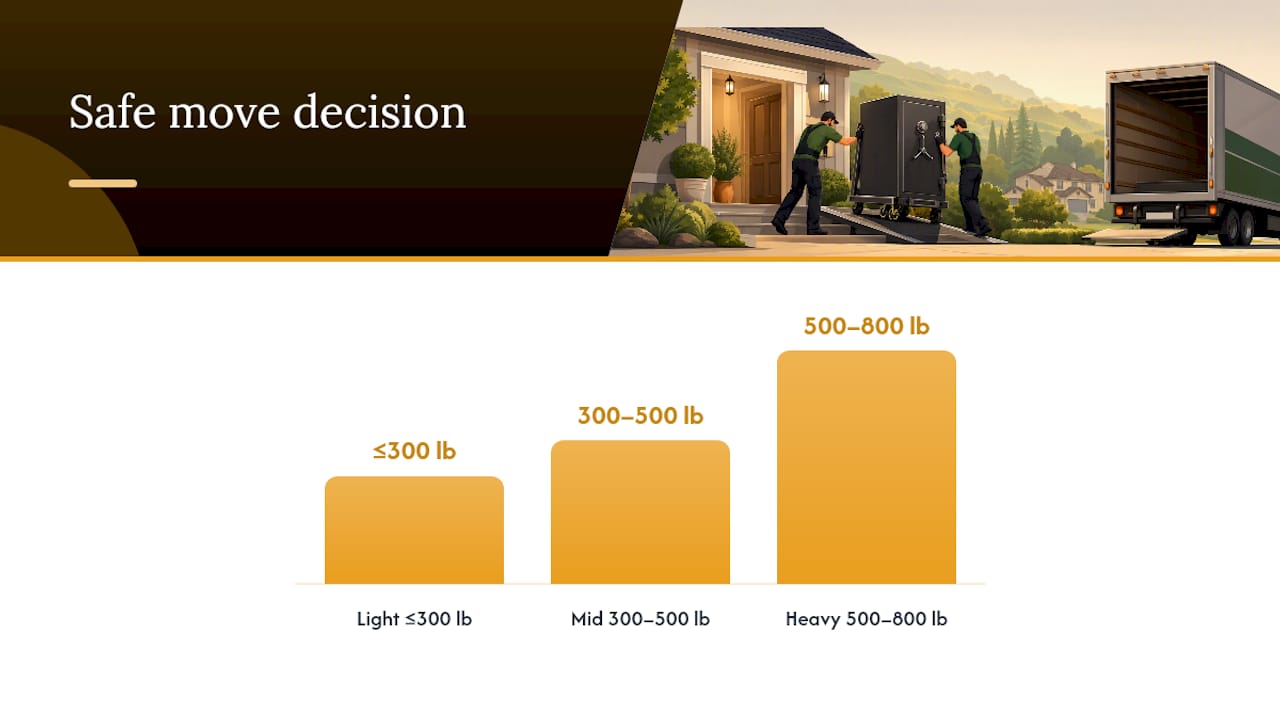
The math is simpler than most people expect. A safe under 300 pounds on a flat concrete or hardwood path is a two-person job with a good dolly. Once you cross into the 500 to 800 pound range, or you’re facing stairs, a steep driveway grade, or a sharp turn near a doorway, the equation flips hard toward hiring out.
Home structure matters as much as the safe itself. Older stair framing, floating hardwood floors, and finished basements with narrow stairwell turns all raise the odds of a costly mistake. Liberty Safe’s moving guidance flags tipping and an unstable center of gravity as the primary hazard once a safe gets above that weight range, and recommends professional movers for anything requiring stairs or hoist equipment.
Run the numbers before deciding:
- Under approximately low- to mid-weight range, flat single floor, no stairs: DIY is reasonable with proper equipment.
- Mid-weight range or any second-floor move: borderline. Rent gear and get a second opinion first.
- Heavier range or more: hire professionals. The liability and injury risk outweighs any savings.
- Any stairs, narrow turns, or vehicle loading of a heavy safe: hire professionals, full stop.
- Weigh the pro’s quote against a cracked floor, a dented staircase, or a hospital visit. The comparison usually isn’t close.
What to Do Before Moving a Gun Safe
Every safe move, DIY or professional, starts with the same prep work. Skip a step here and you’re improvising later, usually at the worst possible moment.
- Measure everything. Get the safe’s exact height, width, depth, and weight from the manufacturer’s plate, then measure every doorway, hallway turn, and stair width along the route. Note handle locations and any protrusions that could catch on a frame.
- Empty the safe completely. Remove firearms, ammunition, and valuables before moving day. Manufacturer guidance from Liberty Safe treats this as a baseline safety step, both to cut dead weight and to prevent contents from shifting and jamming the lock mid move.
- Check floor load capacity. A 700 pound safe concentrates enormous pressure onto a few square feet. If you’re unsure about a floor’s rating, plan to route the safe over joists rather than open span, and consider plywood sheets to spread the load.
- Gather or rent equipment. You’ll want an appliance dolly rated for the safe’s weight, or a no-lift dolly for flat, low-clearance moves, plus ratchet straps, mover’s wrap, furniture pads, and plywood runners. U-Haul’s equipment list is a solid baseline for a rental run.
- Inspect your ramp and vehicle. Check the ramp’s load rating, the tailgate’s rating, and whether your vehicle’s suspension can handle the weight without bottoming out.
- Confirm building rules. If you’re in an apartment or condo, check elevator reservation windows, parking restrictions, and any HOA move-in requirements ahead of time.
Pro Tip: Photograph the route and doorway measurements before move day and text them to your helpers or your mover. It saves an argument on the sidewalk when someone insists “it’ll fit.”
A relocation checklist built for the whole move helps you fold safe prep into the bigger picture instead of treating it as a separate emergency.
How Do You Move a Gun Safe Safely by Yourself?
This sequence applies strictly to flat, single-floor moves with no stairs. If your route includes stairs or a steep grade, stop reading this section and go hire someone.
- Empty the safe and lock it, keeping the key or combination separate from the guns and ammunition per your state’s storage rules.
- Walk the route one more time with a tape measure in hand, confirming every clearance you noted during prep.
- Wrap the safe in mover’s wrap or moving blankets, securing them with tape so nothing shifts against door frames.
- Tip the safe back onto an appliance dolly or slide it onto a no-lift, no-tilt dolly system designed for gun safes. Clipdraw’s no-lift method lets one or two people ratchet a safe onto rollers without ever lifting or tilting it, which works well on flat concrete or hardwood but isn’t built for stairs.
- Strap the safe to the dolly with ratchet straps, cinched tight at two points minimum.
- Assign roles before you move an inch: one person steers, one person watches the route ahead, nobody stands directly behind or below the safe.
- Move slowly and keep the safe upright at every step. U-Haul’s technique guide recommends short, deliberate pushes rather than long momentum runs.
- Load using a rated ramp, keeping the safe centered and strapped to the vehicle wall or floor anchors.
- Once at the destination, unload in reverse order, set the safe level, and check the door swing and lock function before you consider the job done.
Tipping is the real danger here, not the weight itself. A safe that tips even a few inches off-plumb can crush a foot or shatter a floor joist, and manufacturer safety guidance treats keeping the unit upright as the single most important rule of any DIY move. Stairs multiply that risk because there’s no flat surface to catch a shift in momentum. If you feel the safe rock, shift, or lean at any point, stop, set it down if possible, and call in professional help rather than pushing through.
What Does It Cost to Move a Gun Safe?
Price scales almost entirely with weight, distance, and whatever obstacles stand between the safe and the truck. A local move of a small safe on one flat floor tends to sit at the low end of the range. A stair carry or a heavy safe over 800 pounds that needs a hoist or crane setup lands at the high end, sometimes well past it.
- Local move, small safe (under 300 lb), single floor, no stairs: lower end of the typical range.
- Stair carry or tight turns, mid-weight safe: mid-range, reflecting extra crew and time.
- Heavy safe (800+ lb) requiring hoist or crane equipment: highest end, and sometimes priced as a custom job.
Real-world listings from mover marketplaces show gun safe moving services commonly running from roughly $200 on the low end to $1,400 or more for complex jobs, depending on crew size, stairs, and distance. Common surcharges include stair fees, long carry charges when the truck can’t park close, elevator reservation fees in apartment buildings, and weekend or holiday premiums.
You can trim the bill legitimately. Clear the route yourself before the crew arrives, consolidate the safe move with a broader household move to share crew time, and schedule on a weekday rather than a weekend when demand and pricing both run lower.
How to Hire a Gun Safe Mover You Can Trust
Not every general mover has handled a 900 pound safe, and it shows the moment you ask the wrong question. Vet the company before you sign anything.
- Ask directly about safe-moving experience and request job photos or references from similar-weight jobs.
- Confirm exactly what equipment they’ll bring: appliance dolly rating, stair-climbing equipment, or hoist capability if your job needs it.
- Get crew size in writing, especially for anything over 500 pounds.
- Clarify insurance and valuation coverage before the move, not after something cracks. Ask whether they carry full valuation coverage or only the released-value minimum, and understand why liability insurance matters for an item this heavy and hard to replace.
- For interstate moves, verify the company’s USDOT number and check their standing against FMCSA’s consumer protections, which spells out documentation you’re entitled to request, including a written estimate and bill of lading.
- Put elevator reservations, parking access, and surcharge terms into the written contract, not a verbal promise.
How Movecraftmoving Vets Partners for Safe Moves
Certain services connect customers with vetted carriers and logistics professionals, stressing partner integrity, performance, and consistency. That standard applies directly to gun safe moves, where equipment mismatches and undertrained crews cause most of the damage claims.
Before matching a customer with a carrier for a safe move, the process typically covers:
- Confirming the carrier has the dolly, strap, and hoist equipment the specific safe weight requires.
- Walking through insurance and valuation options so there are no surprises on move day.
- Locking in a scheduling window and confirming arrival time with both parties.
- Flagging stair or hoist jobs early so the right crew size gets booked, not a generic two-person team.
Pro Tip: Have your safe’s exact weight and dimensions ready before you request a quote. Vague answers here are the number one reason quotes come in wrong.
Where Should a Gun Safe Go During a Move?
A safe caught mid-transition between homes needs somewhere secure to sit, and not every storage unit is a good fit. Standard self-storage units work fine for short gaps, but a metal safe sitting in an uninsulated unit through a hot Southern summer or a Midwest winter freeze can suffer condensation buildup inside the cabinet over weeks, which affects the finish and, in some units, the electronics on digital locks.
Climate-controlled storage solves that problem and is worth the modest premium if your safe will sit in storage for more than a few weeks. It also protects any documents or valuables you might store alongside firearms in a combination unit. If your move involves a gap between move-out and move-in dates, look at East Coast storage solutions built specifically around relocation timing rather than long-term self-storage, which handles the handoff more smoothly than booking a random unit and hoping the dates line up.
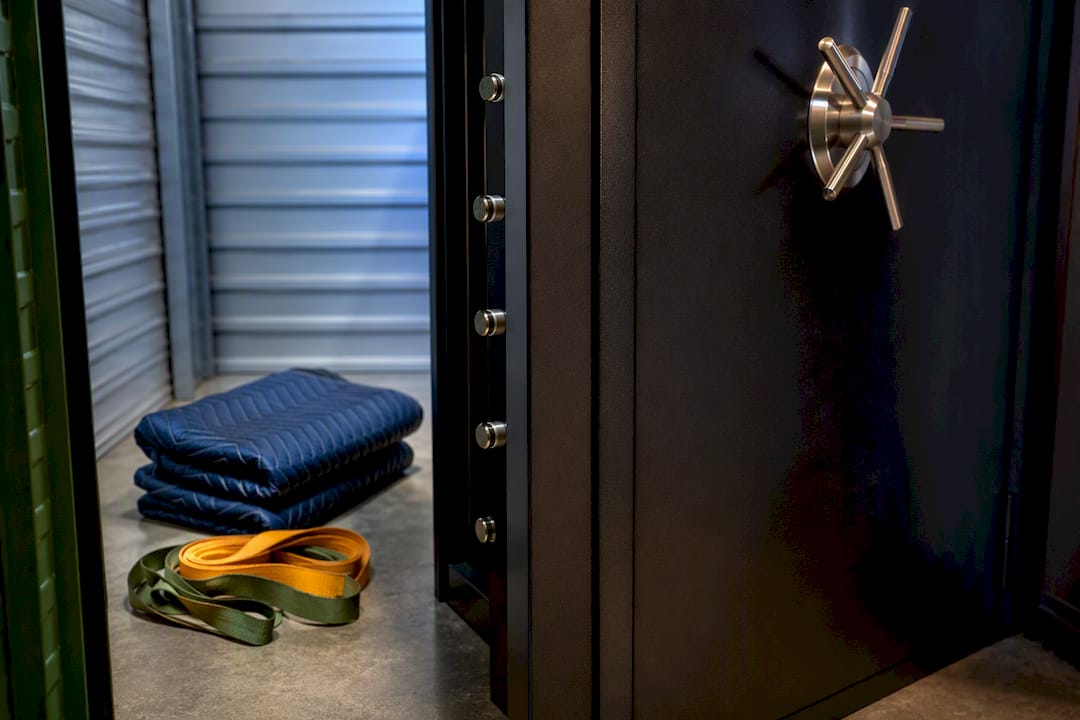
Access matters too. A safe in storage still needs to be reachable if you need something out of it, so ask any storage provider about access hours and whether the facility requires an appointment for large or heavy items. Ground-floor units with drive-up access save a second dolly operation you don’t need to repeat. And if the safe is going straight from truck to storage to your new home, treat storage as one more leg of the same move, meaning it still needs the padding, straps, and dolly work as if it were a full trip rather than a quick set-down.
Our Take: The Real Risk Isn’t the Safe, It’s the Overconfidence
Most guides on this topic treat gun safe moving as an equipment problem: buy the right dolly, get some straps, and you’re set. That’s half true and it’s the half that gets people hurt. The harder problem is judgment, specifically the moment a homeowner decides a 600 pound safe “should be fine” down a flight of stairs because the dolly held up fine in the living room.
Equipment reduces risk on flat ground. It does almost nothing to fix a bad decision about terrain. The single biggest gap between DIY guides and real outcomes is that guides describe ideal conditions, while actual homes have uneven floors, tight stairwell turns, and helpers who’ve never moved anything heavier than a couch. If your situation matches the guide’s assumptions, DIY genuinely works. If it doesn’t, no amount of strapping fixes that mismatch.
What we’d prioritize first: an honest weight and route assessment before buying a single strap. Skip the ego math and get a second opinion, professional or otherwise, on anything approaching 500 pounds.
— Info
Get a Vetted Mover for Your Gun Safe
One alternative to guessing whether a random mover has experience moving gun safes is using a service that matches you with carriers vetted for the equipment, crew size, and insurance coverage a safe move requires.

Coordination through Movecraftmoving means one less unknown on move day: no arriving crew realizing they brought the wrong dolly, no verbal promise about insurance that turns out to be nothing in writing. For heavier moves split across multiple stops or timelines, the split delivery moving checklist walks through exactly how that coordination works.
Ready to move forward? Have your safe’s weight, dimensions, and a few photos of the route ready, along with your target moving dates, and request a quote through Movecraftmoving to get matched with a carrier equipped for the job.
Sources
Consult Liberty Safe and FMCSA for manufacturer and consumer-rights specifics, and always check your safe model’s own manual for weight-specific handling notes.
- Can I Move My Safe? – Liberty Safe
- Ready to Move brochure – FMCSA
- How to Move a Gun Safe | U-Haul
- How to Move a Gun Safe by Yourself | Clipdraw