Interstate east coast moving paperwork is the set of federal and state documents required any time you cross a state line during a residential relocation. The Federal Motor Carrier Safety Administration (FMCSA) governs every aspect of this process, from your mover’s operating authority to the contracts you sign at pickup. Missing even one document can delay your delivery, expose you to fraud, or create legal problems in your new state. Getting organized before moving day is not optional. It is the difference between a clean transition and a costly mess.
What documents are required for interstate moves on the East Coast?

The bill of lading is the single most important document in any interstate move. It acts as the official contract detailing price, delivery window, liability, and the claims process. You sign it at pickup and again at delivery. Never let a mover load your belongings without one in hand.
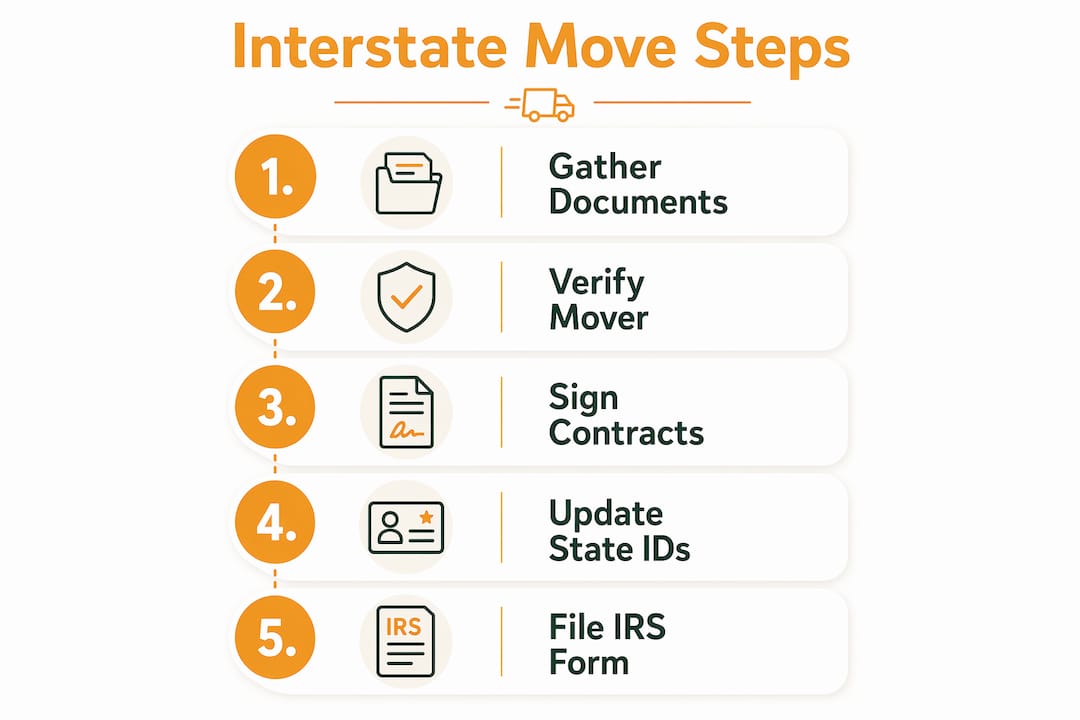
Beyond the bill of lading, your full document package should include:
- Written binding or non-binding estimate. Get this in writing before any work begins. A binding estimate locks in your price; a non-binding estimate can change based on actual weight.
- Valuation selection form. This is not insurance. It determines how much the carrier owes you if items are lost or damaged. Full value protection costs more but covers replacement value.
- FMCSA consumer disclosure booklet. Federal law requires movers to provide “Your Rights and Responsibilities When You Move” before service begins. Read it. It outlines your claims rights and dispute procedures.
- Carrier USDOT number confirmation. Every legitimate interstate mover carries a USDOT number. Confirm it matches the company name on your contract.
- IRS Form 8822. File this to update your address with the IRS so tax documents reach your new home.
- Voter registration update form. Each East Coast state has its own form and deadline. Most accept online submissions through the state board of elections.
Pro Tip: Keep physical copies of your bill of lading, estimate, and valuation form in a folder you carry personally on moving day. Do not pack them in a box.
How do you verify the legitimacy of your interstate moving company?
Mover fraud is a real and documented problem on the East Coast. The FMCSA SAFER website is the official federal database where you can confirm any carrier’s credentials in under two minutes. Here is the exact process:
- Search by USDOT number or company name at safer.fmcsa.dot.gov. Every licensed interstate carrier has a unique USDOT number.
- Confirm “Authorized” operating status. Companies without active FMCSA registration are prohibited from transporting household goods across state lines. “Not Authorized” means walk away.
- Check insurance records. The SAFER database shows active insurance filings. A carrier with lapsed insurance puts your belongings at serious financial risk.
- Identify whether you are dealing with a broker or a carrier. Moving brokers are intermediaries registered with FMCSA who arrange shipments but do not transport goods themselves. Both the broker and the actual carrier must hold valid FMCSA registration.
- Demand a binding estimate in writing. Verbal quotes are unenforceable. If a company refuses to provide a written estimate, that is a clear warning sign.
Understanding the difference between a broker and a carrier matters more than most people realize. A broker hands your move off to a third party. That third party may have a different name, different trucks, and different standards than the company you originally hired. Always ask for the actual carrier’s USDOT number before signing anything. For a deeper look at avoiding moving fraud, the patterns are consistent and preventable.
Pro Tip: Screenshot the FMCSA SAFER results page for your mover and save it with your moving documents. If a dispute arises, that record proves you did your due diligence.
What state-specific paperwork must be handled after an East Coast move?
Crossing any state line on the East Coast triggers a federally regulated move, even for short distances. Moving from New Jersey to New York is just as regulated under FMCSA rules as moving from Maine to Florida. That federal jurisdiction does not end at delivery. Your new state has its own deadlines and requirements that begin the moment you establish residency.
Most East Coast states require you to update your driver’s license and vehicle registration within 30–90 days of establishing residency. The exact window varies by state, so check your new state’s DMV website the week you arrive.
Here is a practical breakdown of the key post-move paperwork categories:
| Document | Deadline | Where to File |
|---|---|---|
| Driver’s license update | 30–60 days (most states) | State DMV in person |
| Vehicle registration and title | 30–60 days (most states) | State DMV or online portal |
| Voter registration | Varies; check state deadline | State board of elections |
| IRS Form 8822 | As soon as possible | IRS.gov or by mail |
| USPS change of address | Before moving day | USPS.com |
| Social Security Administration update | No set deadline | SSA.gov |
Failing to update these records creates real problems. Delayed address updates can cause missed tax notices, lapsed vehicle registrations, and lost jury summons. Some states also impose fines for driving on an out-of-state license past the update deadline.
A few state-specific notes worth knowing:
- New York requires a new driver’s license within 30 days of establishing residency.
- Virginia gives you 60 days to transfer your vehicle title and registration.
- Florida requires both a new license and vehicle registration within 30 days.
- Massachusetts requires voter registration at least 20 days before any election.
The residential move walkthrough from Movecraftmoving covers renter-specific paperwork steps that apply across most East Coast states.
What mistakes do people make with interstate moving paperwork?
Most paperwork problems are avoidable. They happen because people sign documents without reading them, hire unverified movers, or assume deadlines are flexible. They are not.
The most common and costly mistakes include:
- Signing a blank or incomplete bill of lading. Some movers present incomplete contracts at pickup and fill in details later. Never sign a document with blank fields.
- Accepting a verbal estimate only. Interstate moving charges are calculated by weight and distance, not hourly labor. Without a written estimate, you have no legal basis to dispute a final bill.
- Hiring unregistered movers. A company without an active USDOT number cannot legally transport your goods across state lines. Hiring one voids most consumer protections.
- Waiting to file address updates. Many people delay IRS Form 8822 and DMV updates until they feel settled. That delay can mean missed refund checks, lapsed registrations, and complications with voter eligibility.
- Losing track of your documents during the move. Keep your bill of lading, estimate, and valuation form in a bag you carry personally. Do not check them with the movers.
“The bill of lading is your legal protection from the moment the truck is loaded to the moment the last box is delivered. Treat it like a contract, because it is one. Review every line before you sign, and keep your copy until every claim is resolved.”
Staying organized is not about being meticulous by nature. It is about having the right documents when something goes wrong. And in interstate moves, something almost always requires follow-up.
Key Takeaways
Interstate east coast moving paperwork requires verified federal compliance, signed contracts, and timely state updates to protect your move legally and financially.
| Point | Details |
|---|---|
| Bill of lading is mandatory | Sign it at pickup and delivery; never let movers load without one. |
| FMCSA verification protects you | Confirm “Authorized” status on SAFER before hiring any carrier or broker. |
| State deadlines are strict | Update your license, registration, and voter records within 30–90 days of arrival. |
| Written estimates are enforceable | Verbal quotes have no legal standing; always get pricing in writing. |
| Address updates prevent penalties | File IRS Form 8822 and USPS change of address before or on moving day. |
What I’ve learned from watching East Coast moves go sideways
The paperwork failures I see most often share one trait: people trusted the process without verifying it. They assumed the mover was registered. They assumed the estimate was binding. They assumed the bill of lading was standard. Assumptions are expensive in interstate moves.
The single most underused tool in this entire process is the FMCSA SAFER database. It is free, takes two minutes, and tells you everything you need to know about a carrier’s legal standing. Yet most people never check it. They rely on a website, a Google review, or a referral. None of those sources confirm federal operating authority.
State paperwork is the other area where I see real consequences. A missed DMV deadline in Florida or New York is not just an inconvenience. It can mean driving on a technically invalid license, which creates insurance complications if you are ever in an accident. Filing IRS Form 8822 late can mean a tax refund goes to your old address and takes months to recover.
My honest advice: treat your moving paperwork like a closing on a house. Read everything. Sign nothing with blank fields. Verify credentials before you commit. The long-distance insurance guide from Movecraftmoving is worth reading before you finalize valuation coverage, because most people underestimate what “released value protection” actually means for their belongings.
The East Coast corridor from Maine to Florida is one of the busiest moving routes in the country. The movers who operate here range from excellent to fraudulent, and the paperwork is what separates a protected move from an unprotected one.
— Info
How Movecraftmoving handles the paperwork complexity for you
Movecraftmoving works exclusively with FMCSA-registered carriers whose operating authority and insurance records are verified before any booking is confirmed.
Every move coordinated through Movecraftmoving includes written estimates, proper bill of lading documentation, and full consumer disclosure compliance. The team walks you through your valuation options, flags state-specific deadlines for your destination, and keeps your documentation organized from quote to delivery. If you are planning an East Coast relocation and want a partner who treats compliance as a baseline rather than a bonus, start with Movecraftmoving to see how the process works from day one.
FAQ
What is a bill of lading and why does it matter?
The bill of lading is the legally binding contract between you and your mover, covering price, delivery window, and liability. Sign it at pickup and keep your copy until all claims are resolved.
How do I check if my mover is FMCSA registered?
Search the carrier’s USDOT number on the FMCSA SAFER website at safer.fmcsa.dot.gov and confirm the operating status reads “Authorized.”
What is the difference between a moving broker and a carrier?
A broker arranges your move but does not transport your goods; a carrier physically moves them. Both must hold active FMCSA registration, and you should verify both before signing any contract.
How long do I have to update my driver’s license after moving to a new East Coast state?
Most East Coast states require a license update within 30–60 days of establishing residency, though the exact deadline varies by state. Check your new state’s DMV website immediately after arrival.
What is IRS Form 8822 and when should I file it?
IRS Form 8822 is the official address change notification for the Internal Revenue Service. File it as soon as you have your new address confirmed to prevent tax documents from going to your old location.
Recommended
- How to Avoid Long Distance Moving Scams in 2026 – Move Craft Moving Solutions LLC
- Commercial Move Vendor Coordination Checklist for 2026 – Move Craft Moving Solutions LLC
- Long Distance Moving Insurance Guide for Your Move – Move Craft Moving Solutions LLC
- Residential Move Walkthrough: What Every Renter Must Know – Move Craft Moving Solutions LLC